Itinerary · 11 Days · November
Seoul, Jeju
& Busan
Seoul · Jeju Island · Busan
|
Apr–Jun, Sep–Nov
|
Fly into Seoul · Out of Seoul
Korea works as a loop, not a line. Fly into Seoul, spend four days in the capital, fly south to Jeju, cross to Busan by air, and return to Seoul by KTX for your flight home. You cover three completely different places, never backtrack, and always end where you need to be.
Unlike Japan where an open jaw makes geographic sense, Korea fans out from Seoul in multiple directions. Jeju is an island reachable only by air. Busan sits 2.5 hours south by high-speed train. The routing we use here is the cleanest way to see all three without wasted days or doubling back. This is not a highlights reel it is a sequenced trip built around how the country actually works.
Before You Go
T-Money Card. Pick one up the moment you land at Incheon. It covers every subway line, bus, and the AREX airport express. Top it up at any convenience store. One per person, non-negotiable.
Discover Seoul Pass (DSP). Covers palace entry, the Han River cruise, Namsan cable car, and the city bus night tour. Buy it for your first two days in Seoul and it pays for itself. Available at Incheon airport and major subway stations.
Domestic flights. Book both early Seoul Gimpo to Jeju, and Jeju to Busan on Air Busan, Jeju Air, or Jin Air. These routes are cheap and frequent but fill up fast around Korean public holidays. Book through the airline apps directly.
KTX Busan to Seoul. Book on the Korail website or Let's Korail app. The 10:28AM departure from Busan arrives in Seoul by 1PM, leaving the afternoon free on your last full day. Window seats on the left side going north have the better views arriving into Seoul.
Where to Stay
Seoul: near Seoul Station. The AREX express terminates here, every subway line passes through it, and you are 20 minutes from the palaces and 15 from Myeongdong. Convenient from the moment you land to the moment you leave.
Jeju: central Jeju City. You will be on guided tours both days so your hotel location matters less than price. Stay central and keep the budget for experiences.
Busan: Gwangalli Beach, not Haeundae. Gwangalli is quieter, more local in character, the food on the street is better, and the night views of the Gwangan Bridge from the beachfront are one of the best free sights in Korea. Haeundae is more developed, more expensive, and more tourist-facing.
Seoul · Days 1 to 4
✈
Arrival · Seoul
Incheon to Seoul Station
Fly into Incheon. Clear immigration, collect your T-Money card at the airport kiosk, take the AREX express to Seoul Station in 43 minutes. Check in and get your bearings. If your flight connects through Hong Kong and the layover is four hours or more, Tim Ho Wan inside the airport is Michelin-starred dim sum with no queue and no need to exit. The Star Ferry across Victoria Harbour takes 8 minutes and costs almost nothing.
AREX Express · 43 min
Seoul Station
T-Money Card
Dinner
Myeongdong Street Food strip, 10 minutes from Seoul Station. Tteokbokki (spicy rice cakes), hotteok (sweet pancake), Korean fried chicken. Eat standing, keep moving. Loud, touristy, genuinely delicious.
1
Seoul · Day 1
Palaces, Hanbok & Namsan at Sunset
Start at Gyeongbokgung Palace. The changing of the guard happens at 10AM time your arrival around it. Rent a hanbok from Hanboknam nearby and palace entry is free in traditional dress. Walk to Bukchon Hanok Village, the preserved neighbourhood of traditional wooden houses above the city. In the afternoon, Changdeokgung Palace with the Secret Garden is a separate ticket and a completely different experience: smaller, forested, and far less visited. End the day at Namsan Tower by cable car. The city at sunset from up there earns every photograph.
Gyeongbokgung Palace
Hanboknam Hanbok Rental
Bukchon Hanok Village
Changdeokgung Secret Garden
Namsan Tower Cable Car
Meals
Lunch: Tosokchon Samgyetang, the most famous ginseng chicken soup in Korea. A whole young chicken stuffed with glutinous rice and ginseng, slow-cooked until the meat falls apart. Queue starts before opening and moves fast. Near Gyeongbokgung. Dinner: Myeongdong street food or sit-down Korean BBQ nearby.
2
Seoul · Day 2
Gangnam, Han River & Hongdae by Night
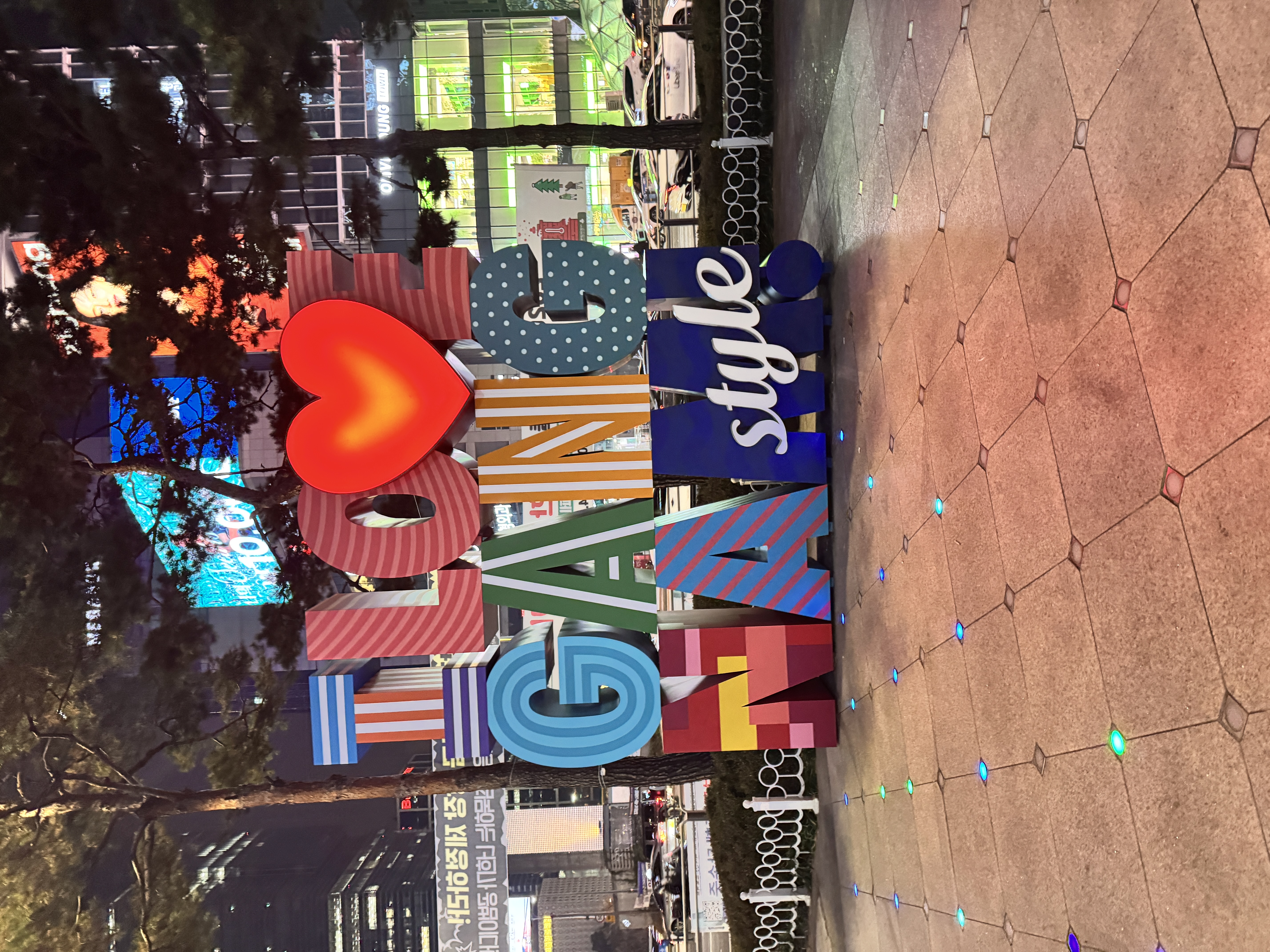
Gangnam is worth a morning for what it represents as much as what it looks like. COEX Mall and the Starfield Library inside it are genuinely striking: a multi-storey open library built inside a shopping mall, entirely free to walk through. The Han River sunset cruise in the late afternoon is easy to book via the Discover Seoul Pass and reliably good. In the evening, take the train to Hongdae. The university neighbourhood comes alive after 7PM with street performances, independent restaurants, and a crowd that is young and entirely unself-conscious. Korean BBQ here costs a third of what you pay near the palaces.
Starfield Library · COEX
Han River Sunset Cruise
Hongdae
Meals
Lunch: COEX food court or The Chefs at Starfield. Dinner: Korean BBQ in Hongdae at GIT TTEUL. Order the beef short rib and the pork belly. The combination of grilled meat, banchan side dishes, and soju at a low table with overhead ventilation is the defining Korea dining experience.
3
Seoul · Day 3
Nami Island, Morning Calm Garden & Railbike
A full day tour out of Seoul and one of the best single days on the itinerary. The combination covers three entirely different experiences in one loop: Nami Island (the tree-lined island made famous by a Korean drama), the Garden of Morning Calm (a formal garden at peak autumn foliage), and the Gapyeong Railbike (a two-person bike on an old train track cutting through the countryside). Book through Klook. Tours depart early morning and return by 7:30PM. It is a long day that never drags.
Nami Island
Garden of Morning Calm
Gapyeong Railbike
Book via Klook
Meals
Most Klook tours include a lunch stop. Dinner back in Seoul: the area around Seoul Station has good options for a late meal after a long day. Insadong has a cluster of traditional Korean restaurants worth trying if you have the energy.
4
Seoul · Day 4
DMZ Tour
Standing at the most heavily militarised border in the world, looking into North Korea across a few hundred metres of silence, is an experience that does not translate into photographs. Half-day and full-day tours depart from central Seoul. The full-day version includes the Joint Security Area at Panmunjom where you can technically stand on North Korean soil under UN supervision. Book through an authorised operator. Carry your original passport, not a copy. Check current access rules with your operator at booking as they change periodically.
DMZ
Joint Security Area
Panmunjom
Original passport required
Meals
Most DMZ tours include lunch. Evening: Cheonggyecheon Stream is walking distance from central Seoul and beautiful at night with LED light installations. A good final evening in the city before flying to Jeju.
Jeju Island · Days 5 to 6
5
Seoul to Jeju
Fly Gimpo to Jeju
Fly from Gimpo, not Incheon. Gimpo is Seoul's domestic airport, 30 minutes from Seoul Station on the AREX all-stop service. The flight to Jeju is under an hour. The island is large driving makes sense if you are comfortable on Korean roads, otherwise book guided tours for both days which cover the highlights efficiently without the stress of navigation.
Gimpo Airport · Domestic
AREX All-Stop Service
Under 1 hour flight
First Dinner in Jeju
Black pork (heukdwaeji) is the island speciality a darker, richer breed of pig distinctly different from mainland Korean pork. Every local will point you to the black pork street near Jeju City. Go there on your first night.
6
Jeju · Full Day
West & South Coast: Waterfalls, Cliffs & Lava Fields
Jeju's coastline is the main event. Volcanic rock formations, waterfalls that drop directly into the sea, crater lakes, and a pace that is noticeably slower than Seoul. The west and south coast tour covers the highlights in a single day: Cheonjeyeon and Cheonjiyeon waterfalls, Jusangjeolli Cliff (hexagonal basalt columns formed by ancient lava cooling at the sea), and Seongsan Ilchulbong the sunrise peak, worth an early morning climb for the view of the crater inside. Book the full day tour through Klook.
Jusangjeolli Cliff
Seongsan Ilchulbong
Cheonjeyeon Falls
Book via Klook
Meals
Lunch on tour. Haenyeo (female free-divers) restaurants near the eastern coast serve the freshest seafood on the island, caught the same morning worth seeking out for dinner.
Busan · Days 7 to 9
7
Jeju to Busan
Fly Direct to Busan · Settle at Gwangalli
Fly Jeju to Busan directly do not return to Seoul first. The route exists and saves you a full wasted day. Check in near Gwangalli Beach. Walk the beachfront in the evening. The Gwangan Bridge lights up at night and the strip of restaurants and cafes facing it is where Busan actually lives, as opposed to Haeundae which is more expensive and more tourist-facing.
Jeju to Busan · Direct
Gwangalli Beach
Gwangan Bridge · Night
Dinner
Any restaurant facing the Gwangan Bridge and order whatever is grilled. The atmosphere does the rest. Busan fried chicken (chimaek) is a local institution order it at least once while you are here.
8
Busan · Day 8
Sky Capsule, Busan X The Sky & Jagalchi Market
The Haeundae Blueline Park Sky Capsule runs along the coast on a narrow-gauge track in glass pods above the sea. Book ahead online it fills up. Busan X The Sky on the 100th floor of the Haeundae LCT is the highest observation deck in Korea. BIFF Square in Nampo-dong is Korea's answer to Hollywood's Walk of Fame, worth an evening walk. Jagalchi Fish Market nearby is one of the best seafood markets in Asia.
Haeundae Sky Capsule
Busan X The Sky · 100th floor
BIFF Square
Jagalchi Fish Market
Meals
Lunch: Jagalchi Fish Market walk the ground floor of live tanks, point at what you want, take it upstairs to a restaurant and it arrives 10 minutes later. No menu, no ambiguity. Best at lunch when the market is at full volume. Dinner: Haeundae Traditional Market or back to Gwangalli for the bridge views.
9
Busan · Day 9
Songdo Cable Car, Oryukdo Skywalk & Busan Luge
The Songdo Air Cruise cable car crosses the bay in glass-bottomed cars. Oryukdo Skywalk is a horseshoe-shaped glass walkway cantilevered over the sea at the southern tip of Busan's coastline. The Busan Luge is a gravity luge track cut into the hillside with city views below. Centum City in the afternoon holds the record as the world's largest department store and has a full spa inside if nine days of moving has caught up with you.
Songdo Air Cruise
Oryukdo Skywalk
Busan Luge
Centum City Spa
Final Night in Busan
Korean BBQ near Gwangalli for the last dinner in Busan. Order the beef short rib. It is the right way to leave the city.
Return to Seoul · Days 10 to 11
10
Busan to Seoul · KTX
High-Speed Train Back to Seoul
KTX from Busan to Seoul takes 2 hours 36 minutes. Take the 10:28AM departure and you arrive by 1PM with the afternoon free in Seoul. Book on the Korail website or Let's Korail app. Gangnam for the last evening: Cheonggyecheon Stream is beautiful at night with the seasonal light installations, free to walk, and a good final memory of the city.
KTX · 2hr 36min
Book via Korail app
Cheonggyecheon Stream
Gangnam
Final Dinner
Gangnam has Seoul's best concentration of high-end restaurants for a final splurge. A Diamond Bay Yacht charter on the Han River is a memorable way to end the trip if the budget allows book in advance.
11
Seoul · Departure
Final Morning, Then Incheon
Final morning, checkout, AREX express from Seoul Station to Incheon in 43 minutes. Incheon Airport has a very good food court landside if you have time before security. Korea has a way of feeling both relentless and deeply satisfying at the same time. You will already be thinking about the next one before you board.
AREX to Incheon · 43 min
Seoul Station
Korea vs Japan
"Japan is ancient, meditative, and obsessively precise. Korea is fast, loud, emotionally direct, and proudly modern. They share a geography and an aesthetic register. Everything else is different."
People who have done Japan ask whether Korea will feel repetitive. It does not. Japan's food culture is about restraint and technique. Korea's is about heat, fermentation, and abundance at the table. Japan asks you to walk slowly through something old. Korea surprises you with how alive a city can feel at midnight on a Tuesday.
Do not approach Korea trying to find what you loved about Japan. What it gives you instead is different and entirely worth the trip. The temples are fewer and less prominent. The nature is different. What Korea offers instead: nightlife that runs until 5AM, the world's best fried chicken, beauty culture taken more seriously than in most European capitals, and a tech infrastructure that makes the rest of the world feel slow. Plan both trips. Do them in either order.
Budget Signal
Budget
$2,000 – $3,000 (₹2 – 2.5L)
Guesthouses, street food and convenience stores, skip paid attractions
Mid-Range
$4,000 – $5,000 (₹3.5 – 5L)
Good city hotels, all meals out, Klook tours, Sky Capsule, KTX, 2 domestic flights included
Luxury
$8,000 – $10,000 (₹7 – 9L)
JW Marriott or Lotte, private DMZ tour, yacht charter on the Han River, Centum City spa
Common Questions
Is 11 days enough for Seoul, Jeju and Busan?
Yes, if you follow a tight routing. Four days in Seoul, two in Jeju, three in Busan, and two return days works well without feeling rushed. The key is flying Jeju to Busan directly rather than returning to Seoul between legs, which would waste a full day.
What is the best time of year to visit South Korea?
April to June for cherry blossoms and warm weather. September to November for autumn foliage, particularly in Nami Island and the Seoul palaces. Both are peak travel seasons book accommodation and flights early. July and August are hot and humid with monsoon rain. January to February is cold but manageable with the right clothing.
Do I need to speak Korean?
No. Seoul's subway system has English signage throughout. Most restaurants near tourist areas have picture menus or English options. Google Translate's camera function handles most situations where Korean-only menus appear. Outside of Seoul, communication can be harder, but pointing and gesturing covers most situations.
Is the DMZ tour worth it?
Yes, for the experience rather than the sightseeing. The physical landscape is unremarkable what it delivers is a visceral sense of history and geopolitical reality that is difficult to find anywhere else in the world. The Joint Security Area full-day version is the more complete experience. Check current availability as access conditions change.
How does Korea compare to Japan for a first-time Asia trip?
Korea is easier to navigate, faster-paced, and cheaper. Japan is more refined in its travel infrastructure and has a more established backpacker trail. If you are choosing between the two for a first trip, Japan is the more complete introduction to the region. If you have done Japan, Korea will feel genuinely different rather than repetitive it is the right follow-up trip.
What is Korean BBQ and how does it work?
Korean BBQ is grilled meat at the table a gas or charcoal grill is set into the centre of the table and you cook the meat yourself as it arrives raw. Orders come with banchan, small side dishes of kimchi, pickled vegetables, and sauces, which are free and refillable. You wrap the cooked meat in lettuce with a smear of ssamjang (fermented paste) and eat in one bite. Order beef short rib and pork belly. Eat in Hongdae for the best value, Gangnam for the best quality.
What to Pack · Autumn (Sep–Nov)
Layers are essential. Seoul in October can be warm during the day (16–22°C) and cold at night (7–12°C). A light down jacket or a mid-weight coat works well. Busan is slightly warmer than Seoul. Jeju is the warmest of the three. Comfortable walking shoes are non-negotiable Seoul days average 15,000 to 20,000 steps. Bring a portable charger: you will use your phone constantly for maps and translation.
Personal experience disclaimer. Everything on this page reflects our own travel experiences and is shared in good faith as personal opinion, not professional advice. Travel conditions, prices, visa requirements, transport schedules, business hours and safety situations change. Verify all critical details independently before you travel. Atlas & Archives accepts no liability for decisions made based on this content. · All photographs, itineraries and written content are the original work of Atlas & Archives and are protected under copyright law. No content may be reproduced without prior written permission.