Itinerary · 10 Days · January
Vietnam, North to South
Hanoi · Ha Long Bay · Da Nang · Hoi An · Ho Chi Minh City | Oct-Apr (dry season) | Fly into Hanoi, out of HCMC
Vietnam does not ease you in. Within an hour of landing in Hanoi you are on the back of a motorbike of noise and colour and the smell of pho from a pavement stall, and you realise this is going to be one of those trips. Ten days from north to south: the ancient Old Quarter, a bay of limestone islands, mountain temples with golden bridges, an ancient trading town, and a city that does not sleep. It is a lot. It is worth it.
Before You Go
The routing. This is an open jaw trip: fly into Hanoi and out of Ho Chi Minh City (Saigon). Do not book a return to Hanoi. The country runs north to south and you move in one clean direction. Internal flights connect Hanoi to Da Nang and Da Nang to Saigon; both are short hops of about an hour. Book these well in advance as VietJet and Bamboo Airways fill up quickly on the popular north-south corridor.
Cash is essential. Vietnam is a cash economy outside of large hotels and shopping malls. ATMs are everywhere but levy fees; withdraw larger amounts less often. The currency is Vietnamese Dong. Denominations run into the hundreds of thousands, which requires some mental recalibration in the first day or two. Activities booked through platforms like Klook run roughly 50-200 USD per day for structured tours. Street food and local eateries are among the cheapest in Southeast Asia, often 2-5 USD for a full meal.
What to book in advance. Ha Long Bay tour (Day 3), Ninh Binh tour (Day 2), Ba Na Hills tickets (Day 5), and the Marble Mountain and Hoi An combined tour (Day 6). The Cu Chi Tunnels and Mekong Delta tour in Saigon (Day 8) also sells out. Book these before you travel or within the first day of arriving.
Getting around. Grab (the Southeast Asian equivalent of Uber) works reliably in all major cities. Fares are cheap and metered so there is no negotiation. Use it for all city transfers. Intercity movement is by domestic flight for this itinerary, which keeps pace manageable on a 10-day trip.
Fast Track Immigration
On arrival at Hanoi's Noi Bai International Airport, fast track immigration is available for a fee and cuts the queue significantly, particularly on busy evenings. Worth it after a long flight. Arrange through your airline or a third-party service before departure. A Grab cab from the airport to the Old Quarter takes about 45 minutes and costs a fraction of the tourist taxis outside arrivals.
Day by Day
1
Hanoi · Arrival
The Old Quarter Hits You Before You Are Ready
Fast track immigration, Grab to your hotel, early check-in. Have a local breakfast near the hotel, which in Hanoi means pho or banh mi from a pavement stall. By mid-morning, walk to Hoan Kiem Lake: the small Turtle Tower sits in the middle of the water, and the red Huc Bridge leads to Ngoc Son Temple on a small island. This is as central and as beautiful as Hanoi gets. Spend the afternoon exploring the 36 streets of the Old Quarter and Dong Xuan Market, the largest covered market in the city. Rest in the late afternoon. As evening comes, Train Street is worth the walk, though it is touristy. End the night at Ta Hien Beer Street for bia hoi (fresh draught beer, poured from a keg, costing around 25 cents a glass), and dinner at a local spot nearby. Nollowa and Don Chicken are both reliable late-night options in the area.
Hoan Kiem LakeNgoc Son TempleDong Xuan MarketTrain StreetTa Hien Beer Street
First Night Food
Pho is the obvious choice but Hanoi's specialty is bun cha, a bowl of grilled pork patties and noodles in a light broth with herbs. Find a local stall rather than a restaurant menu. Trung Nguyen coffee is the local chain, worth stopping at for Vietnamese egg coffee, which is exactly what it sounds like and better than it should be.
2
Hanoi · Ninh Binh
Limestone Karsts Before Ha Long
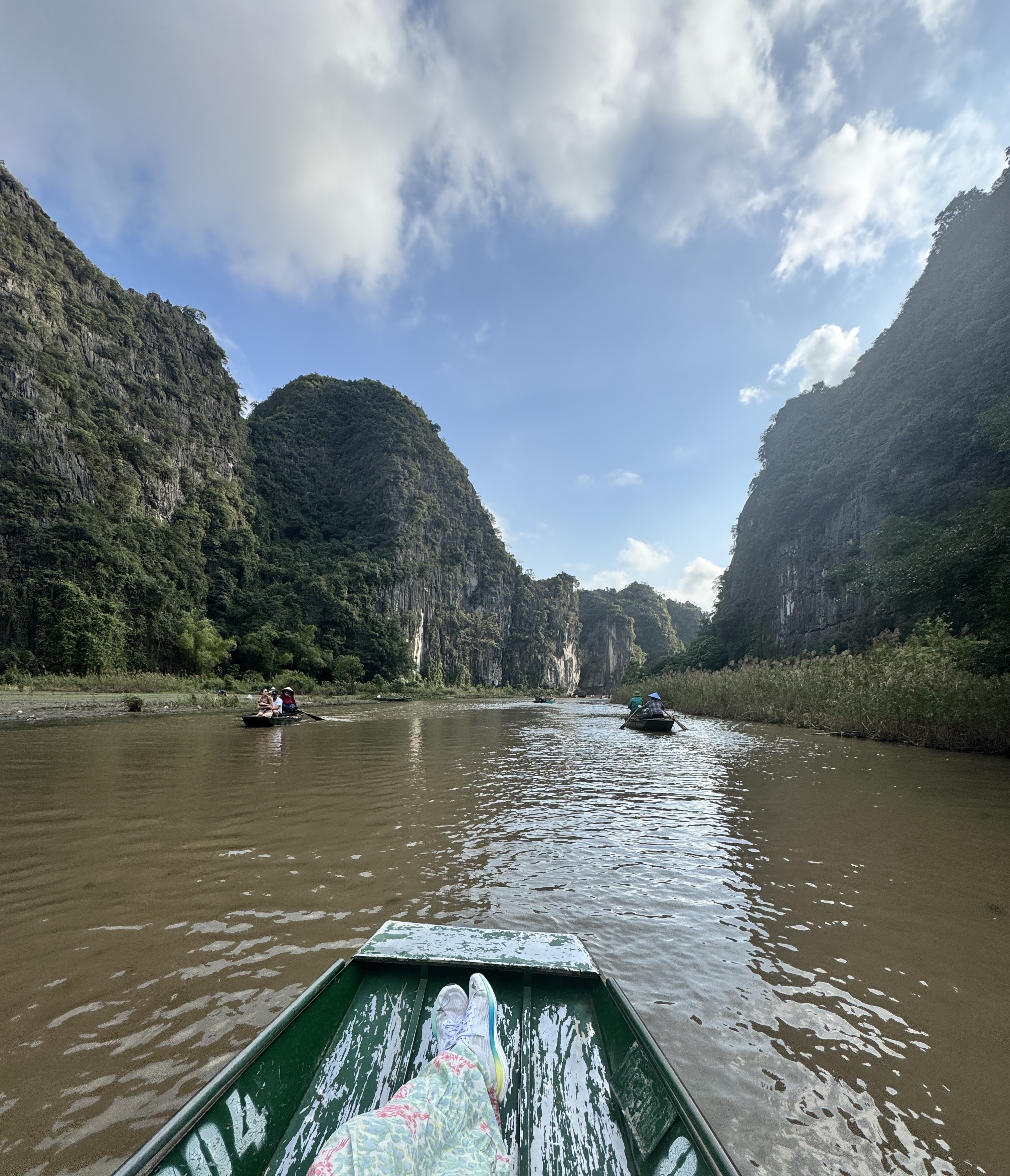
Ready for pickup by 7am. Ninh Binh is often called Ha Long Bay on land, and the comparison is apt: towering limestone formations rise from rice paddies and slow rivers, and you row through them on a small boat with a local guide. The tour covers Trang An or Tam Coc (depending on your operator), Bich Dong Pagoda carved into a cliff face, and typically Hoa Lu, the ancient capital. Lunch is included. The scenery is remarkable and the crowds significantly lighter than Ha Long. Return to Hanoi by early evening. Dinner at Pizza 4P's, a Vietnamese chain that has become legendary for its sourdough crusts and farm-to-table approach. Worth the wait for a table. Evening bus tour of Hanoi is a good option if you have energy, covering the illuminated temples and French Quarter streets.
Ninh Binh TourTrang An CavesHoa LuPizza 4P's
Booking Note
The Ninh Binh tour should be booked before travel. Klook, Viator, and local operators all run versions. Check what is included: some cover boat entry fees, some do not. The drive is about 2 hours each way, so the full day is warranted.
3
Hanoi · Ha Long Bay
The Bay That Earns Every Photograph
Ready for pickup by 7:45am. Ha Long Bay is one of those places where the reality matches the image, which is rare. Nearly two thousand limestone islands emerge from the Gulf of Tonkin over 1,500 square kilometres, some with caves, some with beaches, some inhabited. A full-day tour includes a boat through the bay, kayaking through cave arches, lunch on the water, and high tea on the return. The light in the late afternoon turns everything amber and the islands go dark against the sky. It is visually extraordinary. Return to Hanoi in the evening. Dinner at Madam Tran or Era, both solid local Vietnamese restaurants in the Old Quarter for a quieter end to a long day.
Ha Long Bay TourKayakingCave ExplorationLunch on Water
Which Tour
Book a reputable operator rather than the cheapest available. The difference in boat quality and crowd levels is significant. Look for tours with smaller group sizes and newer boats. Overnight cruises exist and are worth considering if you have flexibility, but a full-day return works well for this itinerary.
"Vietnam is not a country that reveals itself in photographs. The photographs show the places. What they cannot show is the smell of lemongrass from a street stall at 7am, or the particular chaos of a Hanoi intersection at rush hour, or the silence of Ha Long Bay when the tour boats switch their engines off."
4
Hanoi to Da Nang
Morning Shopping, Afternoon Flight
A half-day in Hanoi before flying south. Trang Tien Plaza, the most central mall in Hanoi, is a good morning stop for last-minute shopping and quality Vietnamese coffee to take home. Cab to the airport at noon. Flight to Da Nang at 3pm, about an hour. Grab to your hotel. Da Nang is a modern beach city and the hotel corridor along My Khe Beach is well developed. Evening is low-key: a sauna or onsen is available at several Da Nang properties, a good recovery after three full Hanoi days. Dinner at Sushi Tamahime, a Japanese restaurant that punches well above its price point in Da Nang.
Trang Tien PlazaHanoi to Da Nang FlightMy Khe Beach AreaSushi Tamahime
5
Da Nang · Ba Na Hills
The Golden Bridge and the Mountain Above the Clouds
Pickup from your hotel at 8am, about 20 minutes by cab to the Ba Na Hills cable car. Ba Na Hills is a French-era hill station developed into a full resort complex, sitting at 1,500 metres above sea level. On a clear day you are above the cloud line and the views are extraordinary. The Golden Bridge is the famous sight: a pedestrian bridge held up by two giant stone hands, running along a ridge with valleys dropping away on both sides. The bridge is real, the hands are real, and it is more impressive in person than in photographs. The complex includes a French village, a wax museum, and amusement rides. Cable car both ways, all included in the ticket. Return to the beach by late afternoon, walk along My Khe, watch the Dragon Bridge at night (it breathes fire on weekends), and dinner at An Thoi for local seafood.
Ba Na HillsGolden BridgeCable CarDragon BridgeAn Thoi Dinner
Golden Bridge Tip
Go early in the morning before the crowds and cloud. By midday the bridge is crowded and visibility can drop. The cable car queue also builds through the morning. Book Ba Na Hills tickets in advance through Klook to skip the ticket counter queue. Bring a light layer as it is noticeably cooler at altitude.
6
Hoi An Day
Marble Mountains, Ancient Town, and a Tour That Does Both
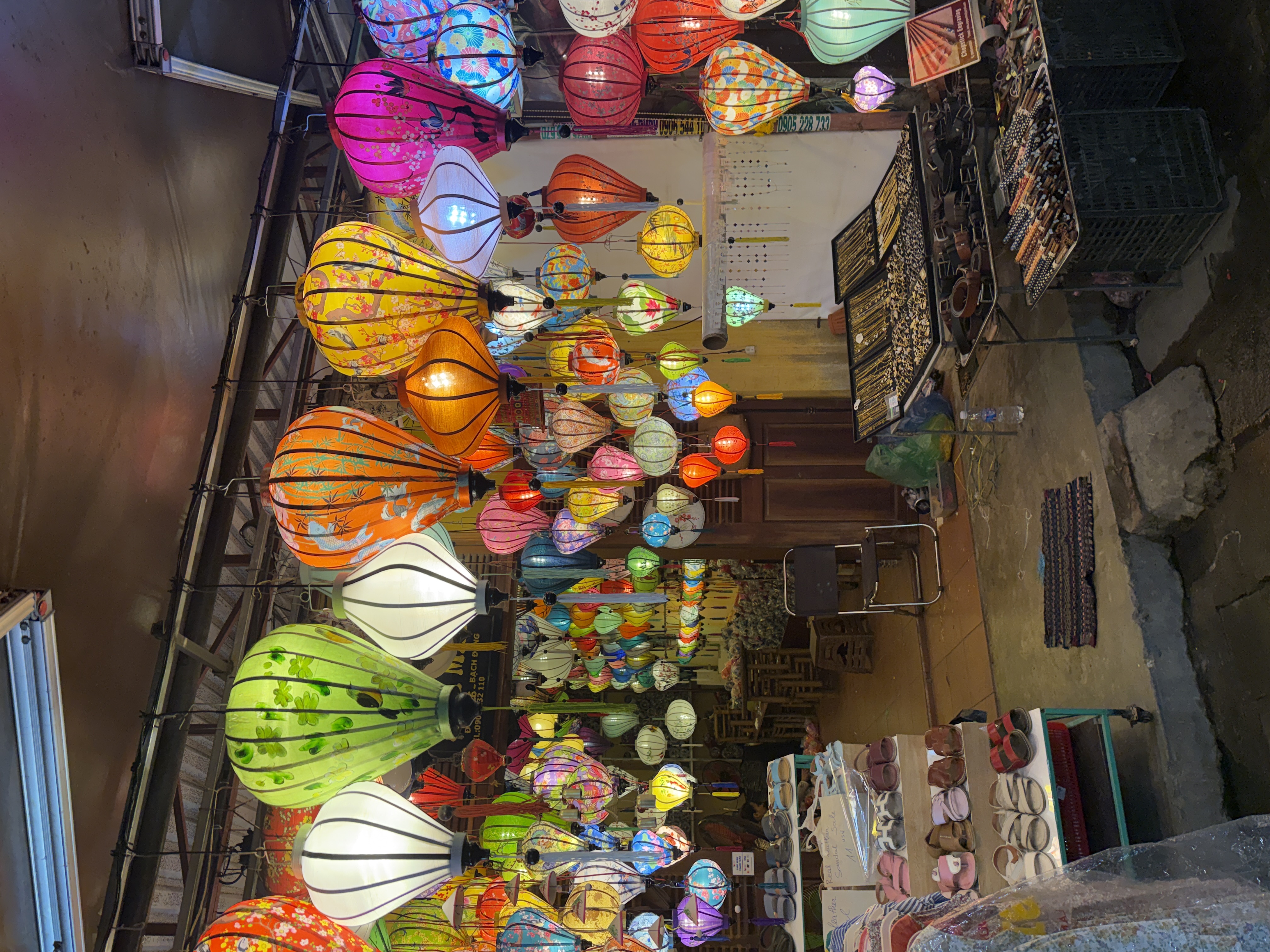
Morning at your hotel's beach facilities and watersports on My Khe. After breakfast, Grab to My Khe Beach for a longer morning session if you want. Lunch at one of the local eateries near the beach. In the afternoon, the combined Marble Mountain and Hoi An tour departs from your hotel at 3:30pm. Marble Mountain is a cluster of five limestone and marble hills south of Da Nang, each with a pagoda, cave temples, and views over the coastline. From there the tour continues to Hoi An Ancient Town, a UNESCO World Heritage Site and one of the best-preserved trading ports in Southeast Asia. The lantern-lit streets, the tailor shops, the canal, the Japanese Covered Bridge: it is exactly as good as everyone says. Dinner is included in the tour. Return to hotel late evening.
My Khe BeachMarble MountainHoi An Ancient TownJapanese Covered Bridge
Hoi An
Hoi An is famous for custom tailoring at very low cost. If you want clothes made, bring reference photographs, arrive early enough in your visit for fittings, and use a shop with good reviews. A full suit or dress can be made in 24-48 hours. The night market along the river is worth walking even if you do not buy anything.
7
Da Nang to Ho Chi Minh City
Last Beach Morning, Then South to Saigon
Walk along the beach at your hotel for a final Da Nang morning. Breakfast at the hotel. Cab to Da Nang airport and fly south to Ho Chi Minh City (Tan Son Nhat Airport), about one hour. Grab to your accommodation in the city. Ho Chi Minh City, still called Saigon by everyone who lives here, is a different register entirely from Hanoi. Wider, newer, louder, more international. Check in, freshen up, and spend the evening walking District 1: the Dong Khoi shopping street, the Saigon Opera House, the Ben Thanh Market area. Dinner at a local pho restaurant. Pho here is different from Hanoi, richer and sweeter, with more condiments on the table. Both are correct. Pho Viet Nam at Pham Hong Thai is a local standard.
Da Nang to HCMC FlightTan Son Nhat AirportDistrict 1Pho Dinner
8
Ho Chi Minh City · Tours
Cu Chi Tunnels and the Mekong Delta
Pickup from near your accommodation at 7am. Cu Chi Tunnels are about 70 kilometres northwest of Saigon: a 250-kilometre underground network used by Viet Cong fighters during the war. You can crawl through a section (optional and claustrophobic but extraordinary), see the trapdoor entrances concealed in the jungle floor, and understand the scale of what was built entirely by hand. The combination tour then moves to the Mekong Delta, the river network that feeds most of Southeast Asia's rice. A boat through the delta waterways, stopping at a honey farm and a coconut candy workshop, lunch included, high tea on the return. Drop-off at your accommodation in the evening. Dinner at Bep Me In on Le Thanh Ton, a Vietnamese home-cooking restaurant of the kind that every city has one of and most visitors never find.
Cu Chi TunnelsMekong DeltaRiver BoatBep Me In Dinner
Cu Chi
The tunnels were built for people considerably smaller than the average Western visitor. The crawlable sections have been widened but it is still tight. Wear clothes you do not mind getting dirty. The tour context is important: a guide who explains the history well makes a significant difference to how you understand what you are seeing.
9
Ho Chi Minh City · City Day
Banh Mi, Hop-On Hop-Off, and the Best Street Food in Saigon
Start with banh mi for breakfast. The Vietnamese banh mi is one of the great sandwiches: a French baguette (the colonial legacy) filled with pork pate, pickled vegetables, fresh herbs, chilli, and a fried egg if you want one. Banh Mi Huynh Hoa on Le Thi Rieng is consistently cited as the best in the city and the queue confirms it. The Hop on Hop Off bus covers the main Saigon sights in about four hours: the Reunification Palace, Notre Dame Cathedral, the General Post Office (one of the most beautiful post offices in the world), and the War Remnants Museum if you want the full historical context. Lunch at ST25 by KOTO, a restaurant that serves the rice variety that won Vietnam's best rice award. Afternoon shopping at Takashimaya on Dong Khoi or Saigon Centre Mall. Dinner at Mayonaka Sushi for a different register entirely.
Banh Mi Huynh HoaHop On Hop Off BusReunification PalaceST25 by KOTOTakashimaya
Saigon Street Food
Beyond banh mi, look for Com Ga Xoi Mo Su Su (fried chicken with rice), Banh Seo (sizzling pancakes filled with pork and shrimp), and Pho Viet Nam at Pham Hong Thai. The best street food in Saigon is found by following the queues of locals rather than the English-language menus.
10
Ho Chi Minh City · Departure
Egg Coffee, One Last Market, Then Home
Final morning in Vietnam starts with egg coffee if you have not had it yet. Originally a Hanoi invention but now found everywhere, it is condensed milk whisked with egg yolk over strong Vietnamese coffee. Peculiar in description, genuinely good in practice. Pack up and check out of your accommodation. Lunch in the city. Ben Thanh Market is the most central option for a final browse and last-minute Vietnamese coffee, lacquerware, and silk purchases. Vincom Center nearby if you prefer air conditioning. Cab to Tan Son Nhat Airport for your departure flight. Most flights home from Saigon go overnight, arriving the following morning.
Egg CoffeeBen Thanh MarketTan Son Nhat Airport
What to Buy
Vietnamese coffee (Trung Nguyen brand, available in any supermarket), dried mango and cashew nuts from Ben Thanh Market, lacquerware, silk scarves from Hoi An if you bought them earlier. Ao dai (traditional Vietnamese dress) can be tailored in Hoi An for a reasonable cost and packed flat. Avoid buying anything amber or tortoiseshell without verifying legality.
Budget Signal
Per Couple
10 nights · Includes accommodation, meals, internal flights, activities and local transport
Budget
$1,000 – $1,500 (Rs.80K – 1.2L)
Guesthouses and mid-range hotels, street food and local restaurants, booking tours locally
Mid-Range
$2,000 – $3,000 (Rs.1.5 – 2.5L)
Good hotels throughout, all meals out including sit-down restaurants, all pre-booked tours, internal flights
Luxury
$3,000 – $5,000 (Rs.3 – 5L)
Five-star hotels in each city, Ha Long Bay overnight cruise, private guides, premium Ba Na Hills and touring throughout
Common Questions
What is the best time to visit Vietnam?
Vietnam is a long country and the weather varies significantly by region. For this north-to-south itinerary, October to April is broadly the right window. Hanoi and the north are dry and cooler (sometimes cold in December and January). Da Nang and Hoi An are dry and warm from February to August. Ho Chi Minh City is dry from November to April. We went in late January and the conditions were excellent throughout.
Is Vietnam safe for travellers?
Vietnam is very safe for travellers. Violent crime against tourists is rare. The main concerns are petty theft (bag snatching from motorbikes in HCMC), traffic (cross roads slowly and make eye contact with drivers), and scams in tourist areas (always agree on a price before getting into a taxi that is not Grab). The locals are generally warm, curious, and helpful. In rural areas outside the cities, communication is harder but pointing, bowing, and a willingness to gesture covers almost everything.
Do you need a visa?
Vietnam offers e-visa for most nationalities, valid for 90 days, applied for online before travel. Processing takes 3 working days. Some nationalities qualify for visa-free entry for up to 45 days. Check the current requirements for your passport on the official Vietnam Immigration website before travel, as the rules have changed several times in recent years.
How different is North Vietnam from South Vietnam?
Considerably different in feel, food, and pace. Hanoi is older, more traditional, more compact, and colder in winter. The food is lighter and the coffee culture is more serious. Ho Chi Minh City is newer, faster, hotter, and more international. The food is richer and sweeter. Da Nang and Hoi An sit in between geographically and culturally. The difference is part of what makes the north-to-south routing so rewarding: you arrive somewhere genuinely new each time.
What should you absolutely eat in Vietnam?
In Hanoi: pho from a street stall at 7am, bun cha at lunch, egg coffee at any point. In Da Nang and Hoi An: mi quang (turmeric noodles with pork and shrimp), cao lau (a Hoi An noodle dish that can only be made with the local water), white rose dumplings. In Ho Chi Minh City: banh mi from Banh Mi Huynh Hoa, com tam (broken rice with grilled pork), banh seo (sizzling pancakes). Vietnamese coffee at every opportunity: strong, cold, and served with condensed milk.
What to Pack · Vietnam
Light cotton or linen for the south and Da Nang (hot and humid). A light layer and one warmer option for Hanoi in January (can drop to 15 degrees at night). Comfortable walking shoes that can handle rain. A small day bag that you keep close in crowded markets. Mosquito repellent, particularly for the Mekong Delta. Sunscreen for beach days. A universal plug adapter. Loose change in Dong for street food and market stalls. Download Google Translate's offline Vietnamese pack before you arrive.
Personal experience disclaimer. Everything on this page reflects our own travel experiences and is shared in good faith as personal opinion, not professional advice. Prices, visa requirements and conditions change. Verify all critical details independently before travel. Atlas & Archives accepts no liability for decisions made based on this content. · All photographs, itineraries and written content are the original work of Atlas & Archives and are protected under copyright law.
Planning a Vietnam trip? We covered all four cities in ten days and know the timings, the tours, and exactly what to eat at every stop.
Talk to Us on WhatsApp
Journal · Coming Soon