Itinerary · 14 Days · November
No time to read everything?
Share your email — we will send you the full Japan itinerary with packing list and booking tips.
Japan in autumn is not a destination, it is a feeling. But before the story, the structure: we fly open jaw, into Tokyo, out of Osaka (or the reverse). Open jaw fares are often the same price as a return ticket, rarely more than 5% extra. What you gain is everything: you move in one clean direction through the country and never backtrack. The logical flow works either direction, Tokyo to Osaka or Osaka to Tokyo. We added Kawaguchiko between Kyoto and Tokyo deliberately, to slow the pace before five days in the world's most relentless city.
This itinerary was built around autumn and the koyo season. If you are travelling in spring for cherry blossom, the route stays identical. The cities, the day counts, the open jaw routing: none of that changes. What changes is the timing, the crowds, and a few specific spots worth prioritising.
When to go. Cherry blossom season in Japan runs roughly late March to mid-April, moving north as the weeks pass. Osaka and Kyoto bloom first, typically late March to early April. Tokyo follows a few days later. Kawaguchiko, at higher altitude, blooms slightly later still, often the first week of April, and the combination of sakura, Mt Fuji, and the lake is one of the great photographic moments in the world. The Japan Meteorological Corporation publishes a sakura forecast each year from January; check it before you book flights.
The spots that matter most in spring. Maruyama Park in Kyoto has a famous weeping cherry tree at its centre, lit at night during blossom season, the queue to photograph it forms early. Philosopher's Path, a two-kilometre canal walk lined with cherry trees, is best at 7am before the crowds arrive. In Tokyo, Chidorigafuchi moat, where you can rent a rowboat under a canopy of sakura, is the image most people carry home. Shinjuku Gyoen is a large formal garden with several varieties blooming at different times, which extends the window. Ueno Park is the local favourite, crowded and celebratory rather than picturesque.
Kawaguchiko in spring is different and arguably better. The combination of sakura in the foreground and Fuji behind it, with the lake as a mirror on a clear morning, is genuinely hard to describe. The Chureito Pagoda viewpoint above Fujiyoshida town gives the classic five-storey pagoda and Fuji shot, framed by cherry trees. Arrive before 8am.
Book further ahead. Spring is Japan's busiest domestic travel season. Ryokans at Kawaguchiko sell out 3-4 months in advance during blossom season. DisneySea, TeamLab, and popular restaurants in Tokyo book up faster than in autumn. If spring is your window, lock in accommodation by December at the latest.
Autumn is quieter, the light is warmer, and the koyo colours are arguably more dramatic than sakura. Spring has cherry blossom but also the highest crowds of the year and unpredictable weather, it can be 8 degrees and raining in Kyoto in late March, or 22 degrees and perfect. Both seasons are worth going for. If this is your first Japan trip and you have flexibility, we would go in autumn. If cherry blossom is the reason you are going, do not let the crowds put you off, just build your days around early mornings.
Open jaw, not return. Fly into Osaka (Kansai), out of Tokyo (Narita or Haneda). Open jaw fares are usually identical to a return, occasionally 5% more. You move in one clean direction through the country and never backtrack.
No JR Pass needed. For this route you take the Shinkansen exactly once. A 14-day JR Pass costs around 50,000 yen per person. The single Shinkansen leg costs about 14,000 yen. Buy the individual ticket on the day or book via the Shinkansen app.
IC Card. Pick up a Suica or Pasmo card at the airport on arrival. Load 5,000 yen. Covers every metro, bus and convenience store purchase in Tokyo, Kyoto and Osaka. Top up at any station kiosk.
Pocket Wi-Fi or SIM. Reserve pocket Wi-Fi before you travel and collect at the airport. Google Maps in Japan is reliable but needs data constantly. Download offline maps as backup.
March and April: cherry blossom. The most visited window of the year. Sakura blooms late March in Osaka and Kyoto, early April in Tokyo, and a week later at Kawaguchiko. Daytime temperatures around 10 to 18°C, dropping to 5°C at night in Kyoto. Hotel prices jump 40 to 60 percent versus shoulder season. Popular ryokans sell out three to four months ahead. Philosopher's Path in Kyoto at noon looks like a train platform. Go early morning everywhere, book by December, and none of this will ruin the trip.
May: first-timer sweet spot. Avoid Golden Week entirely, the first week of May is Japan's busiest domestic travel period. From the second week onwards: temperatures around 18 to 24°C, green everywhere, no crowds, normal prices. Japan at its most pleasant and most overlooked by international visitors.
June and July: rain, then heat. June brings the tsuyu, the plum rain. Temperatures sit around 22 to 28°C but the humidity makes it feel heavier. Grey skies, intermittent downpours. The hydrangea gardens at Kamakura are worth a visit in this weather. July turns serious, 30 to 36°C in Tokyo, higher in Kyoto which sits in a basin and holds heat. Not a window we would choose unless a specific festival is the draw.
August: festivals and serious heat. Obon week in mid-August means local fireworks, Bon Odori dances, and illuminated paper lanterns on rivers. Temperatures hold at 32 to 36°C. Visit temples before 8am, rest from noon to 4pm, back out at dusk. More local energy than peak tourist season. Worth it if you plan around the heat rather than ignore it.
September and October: autumn builds. Typhoon season can clip southern Japan through September, worth checking forecasts before booking. By mid-October the humidity is gone, temperatures settle at 17 to 23°C, and the first colour appears on the maples. Good conditions with lighter crowds than spring and no seasonal premium on hotels.
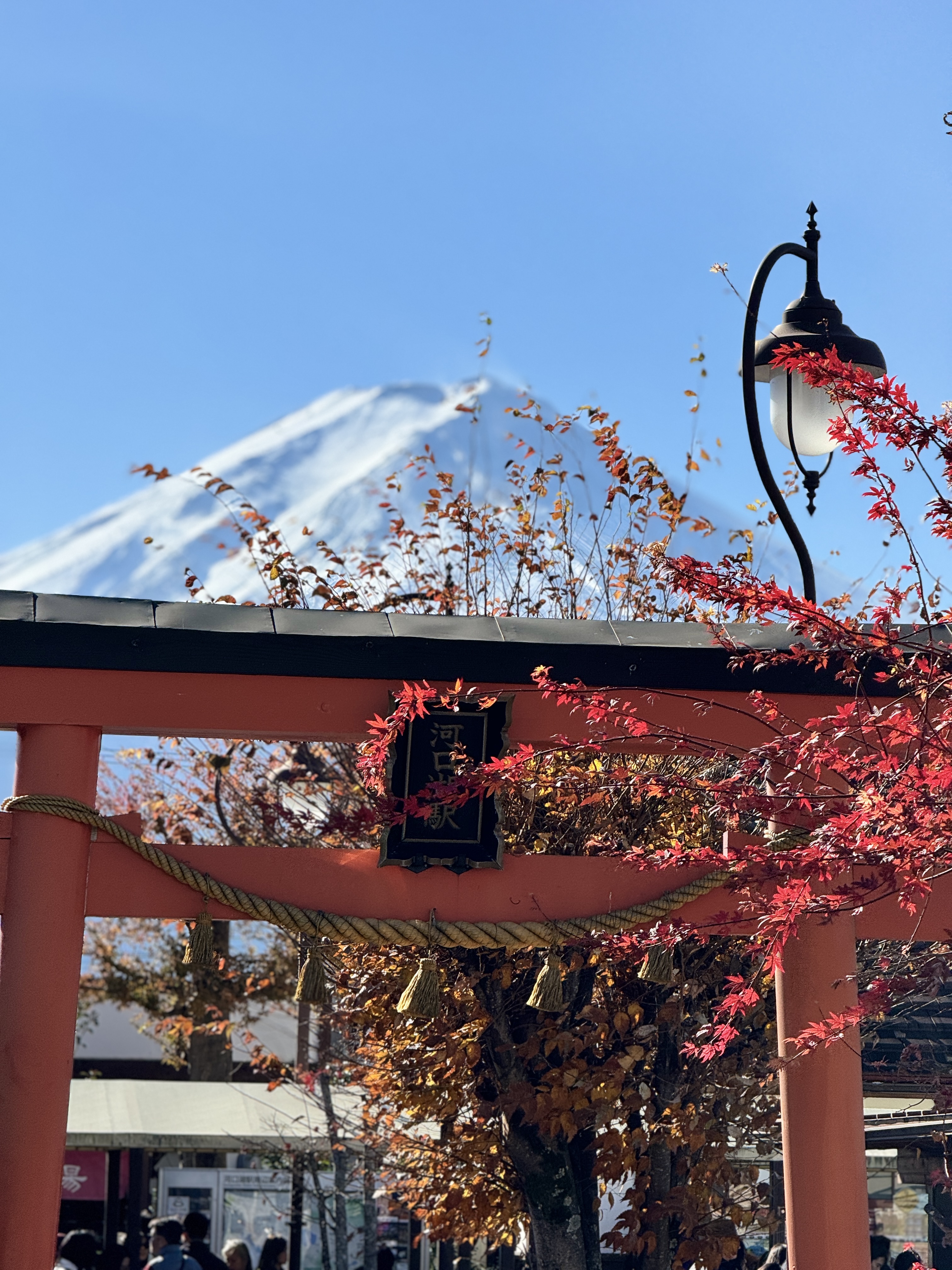
November: the window we recommend. Koyo season. Maple leaves move from green to orange to deep crimson, north to south, through the month. Tofuku-ji and Eikan-do in Kyoto during mid-November are worth the trip on their own. Kawaguchiko with Fuji behind a carpet of colour is the image most people carry home. Temperatures range from 8 to 17°C, cold in the mornings, comfortable in the day. Crowds are real but lighter than spring. This is when we went.
December to February: winter. Temperatures drop to 2 to 10°C in Tokyo, below zero in Hokkaido and Nikko. Snow covers Kyoto's temples from late December. January is Japan's quietest month: lowest prices, shortest queues, fewest tourists. Shorter daylight and cold evenings are the trade-off. If that works, January is a very different Japan from the one most people see.
First trip, best all-round conditions: November. Cherry blossom on the list: late March to early April, book accommodation by December. Best value with fewest crowds: mid-May or January. Avoid: Golden Week (first week of May), late July and August if heat bothers you.
Our itinerary covers Osaka, Kyoto, Kawaguchiko, and Tokyo across 14 days. That is a full trip and we would not cut any of it. But Japan has more, and for longer trips or return visits, here is where the conversation usually goes.
Kawaguchiko vs Hakone. This comes up a lot. Kawaguchiko sits directly at the base of the mountain, the lake reflection shot lives here, and the ryokan experience on the lakeshore is better. Hakone has an open-air sculpture museum, a ropeway over volcanic vents at Owakudani, and a string of hot spring hotels at altitude. Hakone is a resort town. Kawaguchiko is more raw and photographic. First trip: Kawaguchiko. Hakone works as an add-on or alternative for a second visit when you want something less photographed.
Hiroshima and Miyajima. The Peace Memorial Museum is one of the more affecting places we have visited anywhere. Miyajima island, 30 minutes by ferry, has the floating torii gate of Itsukushima Shrine. A two-day add-on from Osaka or Kyoto by Shinkansen, easy to bolt on if you have 16 or more days. The JR Pass starts to make sense if you add this leg.
Hokkaido and Sapporo. A different Japan. Lavender fields at Furano in July, powder snow from December through February that draws skiers from across Asia, seafood that is a cut above anything you will eat in the south. Sapporo's Ramen Yokocho is worth the flight north on its own. Best treated as a dedicated trip rather than tagged onto a Kyoto-Tokyo itinerary. The distances are long and the pace is completely different.
Kobe. 25 minutes by train from Osaka. Harborland waterfront, the Kitano district with its old Western merchant houses, and Kobe beef at a teppanyaki counter if the budget stretches. An easy half-day from an Osaka base, no overnight needed.
Nara. Already in this itinerary as a day trip. 40 minutes by Kintetsu express from Osaka Namba, ¥720 each way. The deer at Nara Park bow before you feed them. Todai-ji is one of the largest wooden structures in the world. Back in Osaka by mid-afternoon with the full day still usable.
The neighbourhood you pick changes the rhythm of your days. Wrong area means 40 minutes of metro before you start. Right area means you walk out of your hotel into the thing you came to see.
Osaka: stay on the Midosuji line. This single subway runs the length of the city, connecting the airport train at Namba up through Shinsaibashi and Umeda. Every major attraction feeds off it.
Namba for first-timers. The Nankai Airport Express terminates here. Dotonburi, Kuromon Market, and the canal are all ten minutes on foot. Loud and neon-lit at night, which is exactly what Japan should feel like on arrival.
Shinsaibashi for a quieter base without losing central access. More boutique hotels, easy access to the covered shopping street, short metro ride to everything.
Umeda if transit is the priority. Every rail line passes through here. Good for day trips to Kobe or Nara, slightly removed from the Dotonbori action.
Kyoto: near Central Station. Not the prettiest neighbourhood. Does not matter. Every major temple is reachable by bus or short subway from here, and those trips add up across four days. Being ten minutes from the station versus thirty saves real time and energy. Hotels here are also far easier to book during peak season, when ryokans in Higashiyama disappear months in advance.
Second visit: a ryokan in Higashiyama or Gion gives you Kyoto after the day-trippers leave. Worth the premium once you have already done the station-area base.
Kawaguchiko: a ryokan on the lake, not a business hotel. The kaiseki dinner, the onsen, the futon on tatami, the walk to the lakeshore at 6am before anyone else is out. Do not treat Kawaguchiko as a day trip from Tokyo. One night minimum, two if you can. Lake-facing rooms are worth the extra. Book three to four months ahead for November and April.
Tokyo: the neighbourhood matters more here than anywhere else.
Shinjuku for first-timers. Seven metro lines, Shinjuku Gyoen, Golden Gai, Omoide Yokocho, all walkable. One thing to know before booking: Kabukicho, Tokyo's red-light district, sits immediately next to Shinjuku Station on the east side. It is safe and not as confronting as the name suggests, but it is busy, loud at night, and not ideal if you are travelling with children or want quieter surroundings after dark. The entertainment concentrated around the east exit, not the west. Knowing this in advance means you are not surprised by it.
Asakusa if old Tokyo is the draw. Senso-ji, Nakamise Street, rickshaws, the Skytree above traditional rooftops. Quieter at night, slightly less central for day trips west. Better fit for families.
Shibuya if the crossing and nightlife are the point. Shibuya Sky observatory at dusk for the crossing shot. Everything stays open late.
Tokyo Station area for repeat visitors doing Shinkansen day trips to Nikko, Kamakura, or Hakone. Corporate feel, less atmospheric for a first trip.
Most people treat Osaka as one night in transit to Kyoto. We gave it three days and would give it four next time. The food alone justifies it.
The ryokans here serve kaiseki dinners, the onsens look out over the lake, and Fuji appears in the early morning when the weather cooperates. Coming in by Shinkansen to Mishima and then the Fujikyu bus keeps the journey itself interesting. Do not rush this leg.
If you'd rather watch than read, here's the full 14-day Japan trip condensed into a single video — every destination, every highlight, in order.
November ranges from warm in Osaka at 18C to cold at Kawaguchiko at 5C at night. Layer intelligently: a light down jacket, one warm mid-layer, base layers. Walking shoes are essential, Tokyo days average 20,000 steps. Cash matters: many rural restaurants, temples and small shops are cash only. Withdraw yen at 7-Eleven ATMs which reliably accept international cards.
Save This Itinerary
Get the complete Japan itinerary in your inbox, with packing list and booking tips.
Planning a Japan trip? We did this route in November and know exactly what worked, what to skip, and how to get the ryokan and restaurant bookings right.
Talk to Us on WhatsApp Read the Japan Journal →