South Korea · 11 Days
Everyone who has done Japan asks the same question about Korea: will it feel repetitive? It does not. Japan is ancient, meditative, and obsessively precise. Korea is fast, loud, emotionally direct, and proudly modern. They share a geography and a broad aesthetic register. Everything else is different, and that difference is exactly why Korea is worth doing on its own terms.
We flew into Seoul on a Tuesday and within two hours were standing in Myeongdong eating tteokbokki off a paper tray. Korea does not ease you in. It hands you the bowl and expects you to keep up.
Four days in Seoul is the right number. The city is enormous, 10 million people inside the city proper and 25 million in the metro area, but it organises itself well and the subway covers everything. The AREX express from Incheon Airport gets you to Seoul Station in 43 minutes, T-Money card in hand, and from there the city opens up entirely.
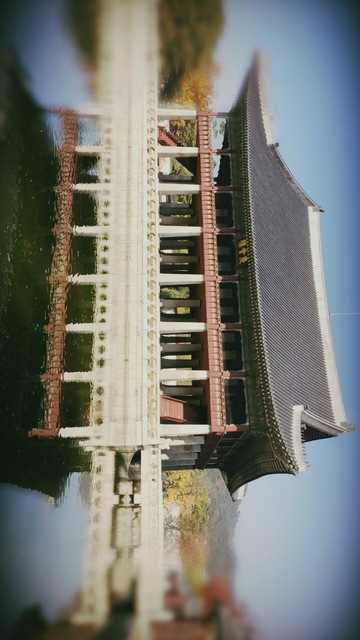
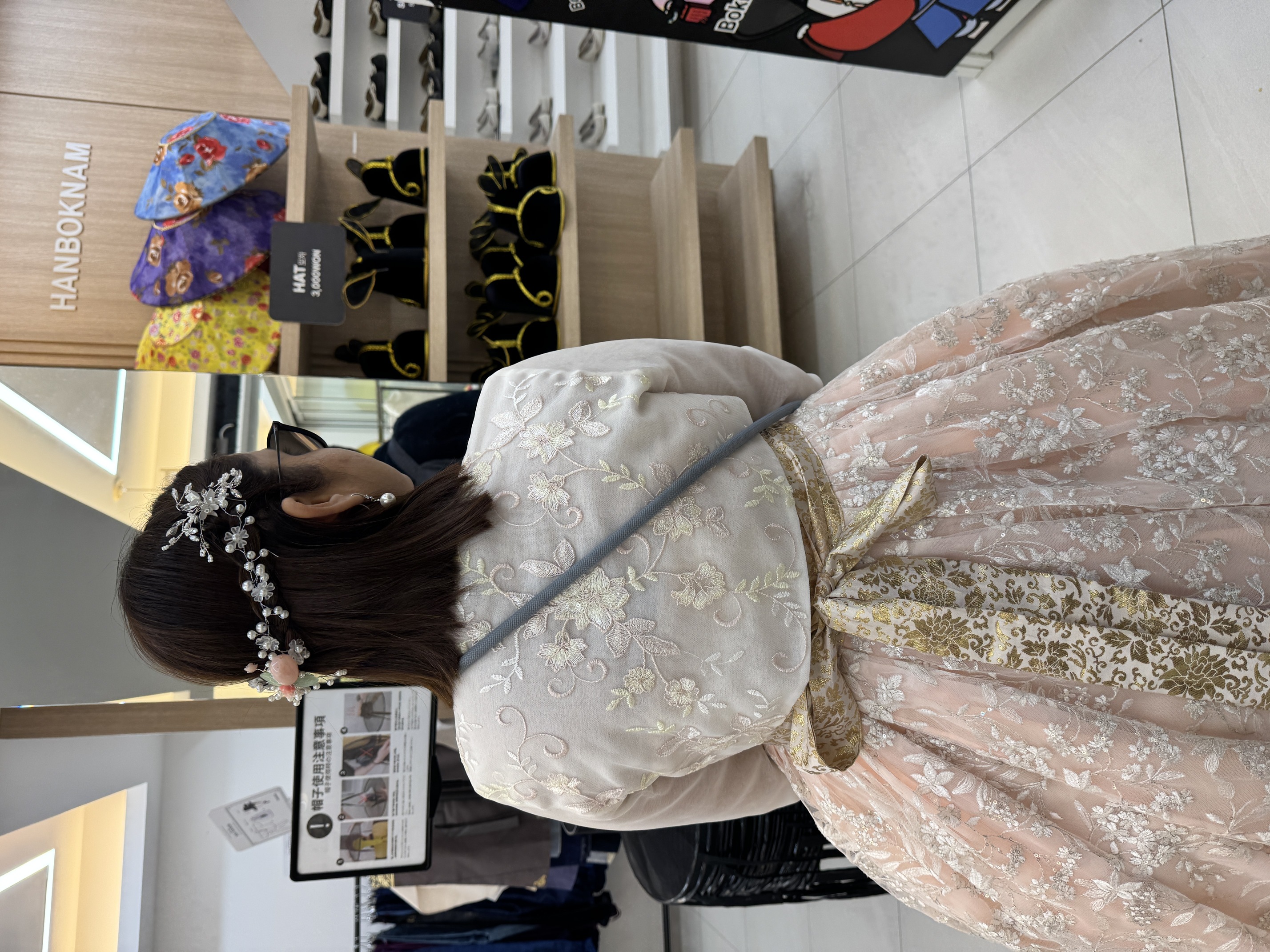
Gyeongbokgung Palace on the first morning. The changing of the guard happens at 10AM, so time your arrival around it. Rent a hanbok from Hanboknam nearby and palace entry is free in traditional dress. This is not a tourist gimmick. Walking the palace courtyards in a hanbok, surrounded by others doing the same, shifts something about how you move through the space. It slows you down, which is the correct pace for Gyeongbokgung. Do not skip it.
Walk from the palace to Bukchon Hanok Village, the preserved neighbourhood of traditional wooden houses set on a hillside above the city. The alley between the houses frames a view of the modern skyline behind it. The contrast is one of those things that photographs well and is better in person.
Lunch: Tosokchon Samgyetang, near the palace. A whole young chicken stuffed with glutinous rice and ginseng, slow-cooked until the meat falls apart. The queue starts before opening and moves fast. Worth every minute of the wait.
Covers palace entry, the Han River cruise, Namsan cable car, and the city bus night tour. Buy it for your first two days in Seoul and it pays for itself. Available at Incheon airport and major subway stations.
Day two: Gangnam in the morning. The Starfield Library inside COEX Mall is one of those surprising spaces, a multi-storey open library built inside a shopping centre, entirely free to walk through. The Han River sunset cruise in the late afternoon takes about an hour on the water and is easy to book through the Discover Seoul Pass. Then Hongdae in the evening. The university neighbourhood comes alive after 7PM with street performances, independent restaurants, and a crowd that is completely at ease with itself. Korean BBQ here costs a third of what you pay near the palaces.
"Korean BBQ in Hongdae is where the city actually eats. Order the beef short rib. Wrap it in lettuce with a smear of ssamjang and eat in one bite. This is the defining Korea dining experience and it should be done at least twice."
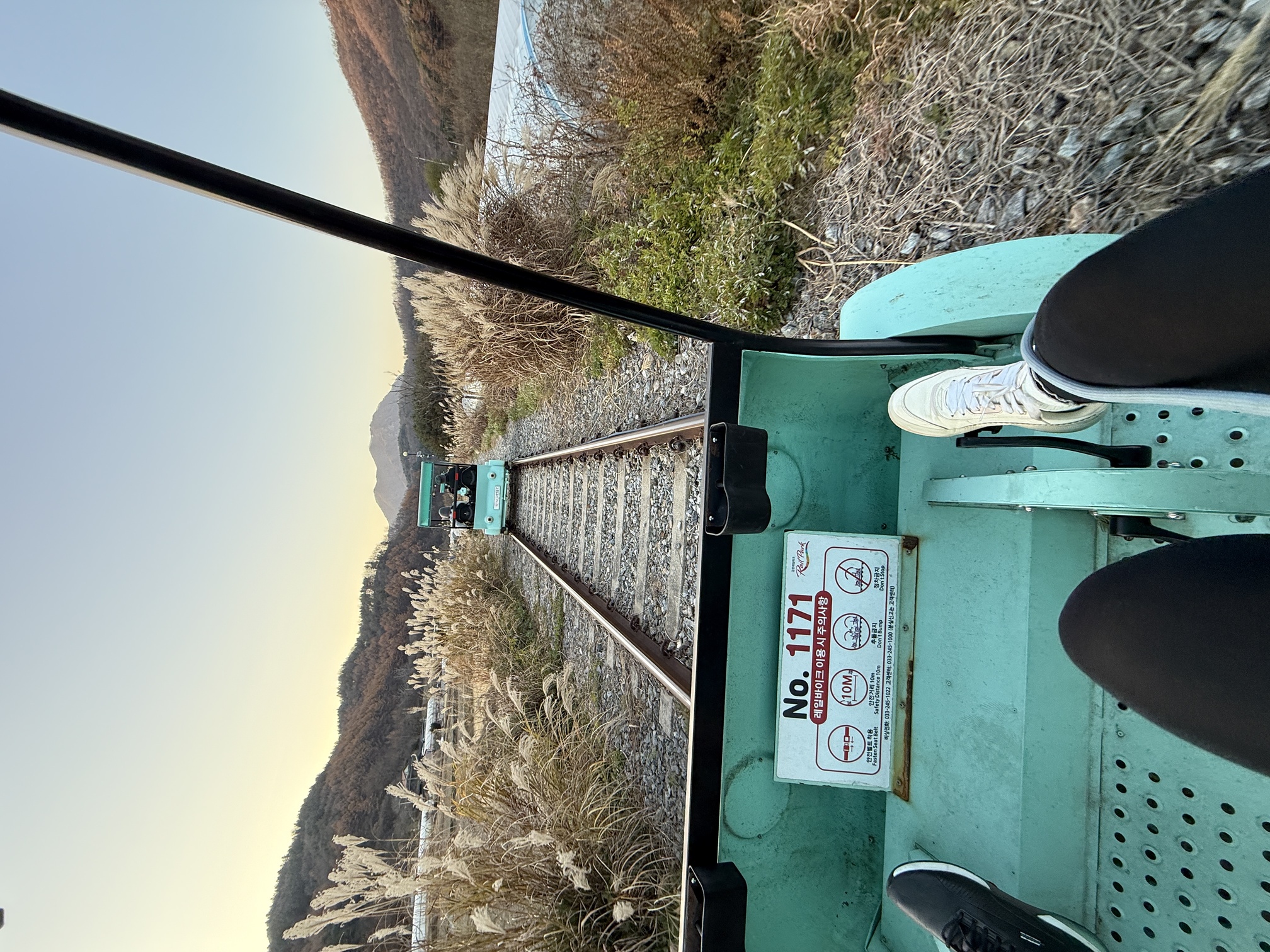
Day three: the Nami Island, Morning Calm Garden, and Railbike combination, a full day tour booked through Klook and one of the best single days on the entire itinerary. Nami Island is the tree-lined island made famous by a Korean drama. The Garden of Morning Calm in autumn foliage is formal and beautiful in equal measure. The Gapyeong Railbike, a two-person bike on an old train track through countryside, is simply fun. Tours depart early morning and return by 7:30PM. Long but never slow.
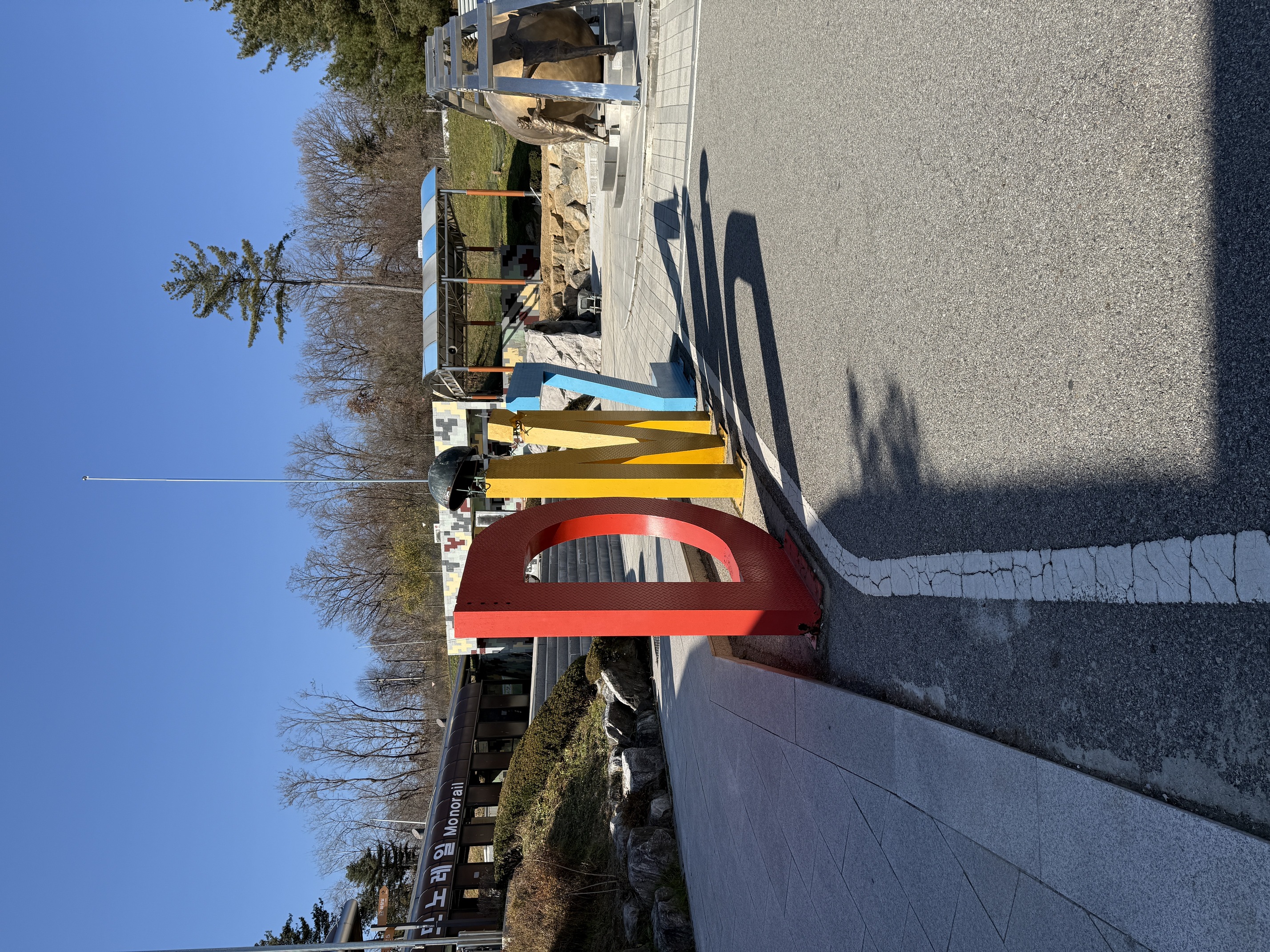
Day four: the DMZ. Standing at the most heavily militarised border in the world and looking into North Korea across a few hundred metres of silence is an experience that does not translate into photographs. The full day version includes the Joint Security Area at Panmunjom, where you can technically stand on North Korean soil under UN supervision. Carry your original passport. Check current access with your operator at booking as conditions change.
Fly from Gimpo, not Incheon. Gimpo is Seoul's domestic airport, 30 minutes from Seoul Station on the AREX all-stop service. The flight to Jeju is under an hour. Jeju is a different place from Seoul in almost every sense, volcanic, slower, and organised around its coastline rather than its city.
The first night on the island: black pork. Heukdwaeji is the island speciality, a darker and richer breed of pig distinctly different from mainland Korean pork. Every local will point you to the black pork street near Jeju City. Go there on your first evening and order without overthinking it.
The second day: the west and south coast tour. Jeju's coastline is the main event. Volcanic rock formations, waterfalls that drop directly into the sea, and a pace that is noticeably slower than Seoul. The tour covers Cheonjeyeon and Cheonjiyeon waterfalls, Jusangjeolli Cliff (hexagonal basalt columns formed by lava cooling against the sea, which looks improbable and is entirely real), and Seongsan Ilchulbong, the sunrise peak worth an early morning climb for the crater view from the top. Book through Klook.
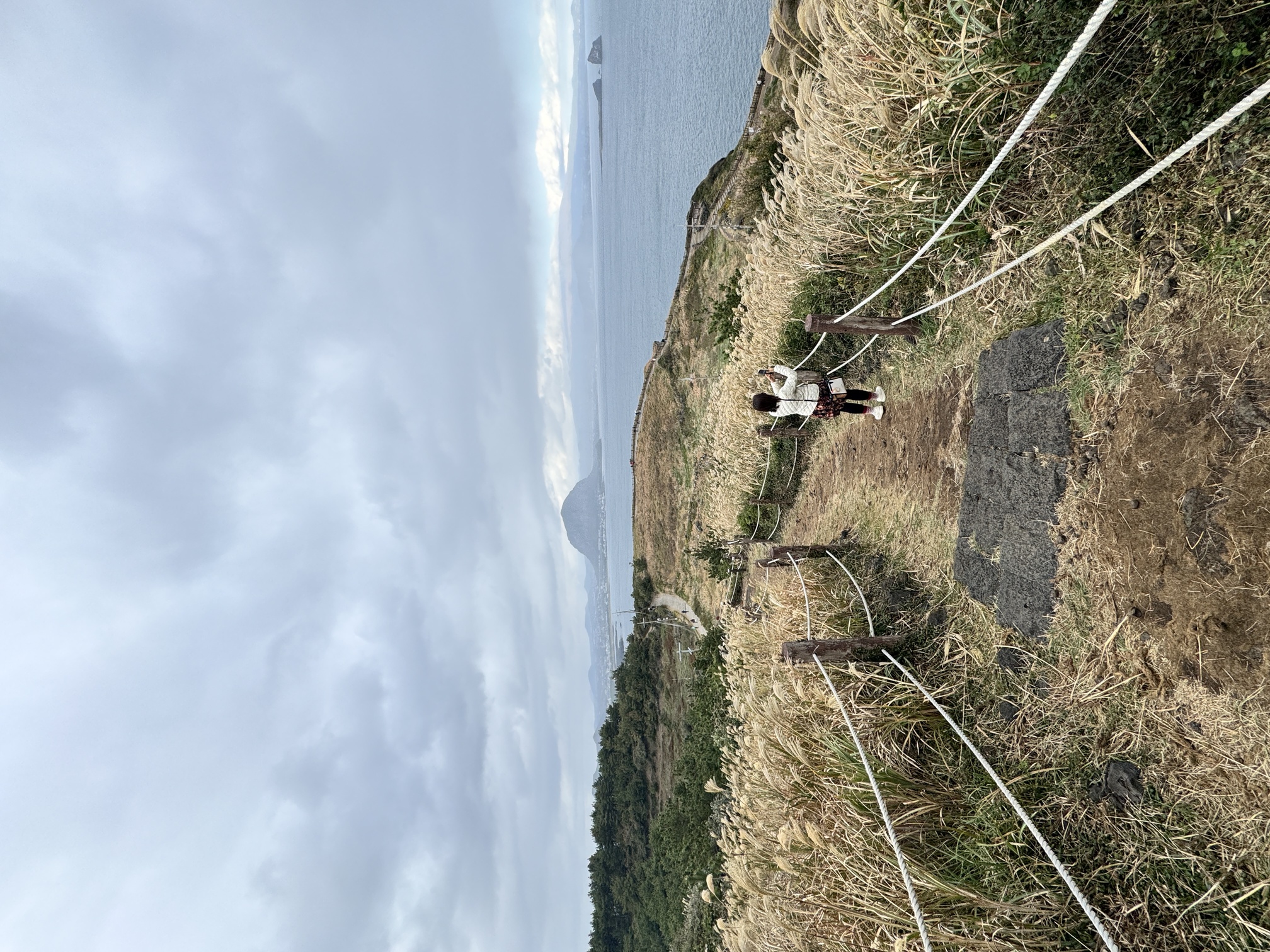
"Jusangjeolli Cliff looks like something designed specifically to be photographed. The basalt columns stack so perfectly you keep expecting a seam. There is no seam. It is just what lava does when it cools against the sea."
Fly Jeju to Busan directly. Do not return to Seoul between legs. The route exists on every major domestic carrier and saves a full day that would otherwise be wasted in transit. Check in near Gwangalli Beach rather than Haeundae. Gwangalli is quieter, more local in character, the food on the street is better, and the night views of the Gwangan Bridge from the beachfront are one of the best free sights in the country. Walk the beach on your first evening, find a restaurant facing the water, and order whatever is grilled.
Day one in Busan: Gamcheon and Jagalchi. Start the morning at Gamcheon Culture Village. Built into a steep hillside above the city, Gamcheon is a maze of narrow staircases, murals, and pastel-painted houses overlooking the port below. It is sometimes called the Santorini of Korea, which undersells it. Rent a hanbok at the village entrance and walk the alleys in traditional dress. The combination of the painted walls, the steep lanes, and the hanbok gives you photographs that look unlike anything else from the entire trip. Spend at least two hours here and resist the urge to rush toward the viewpoint.
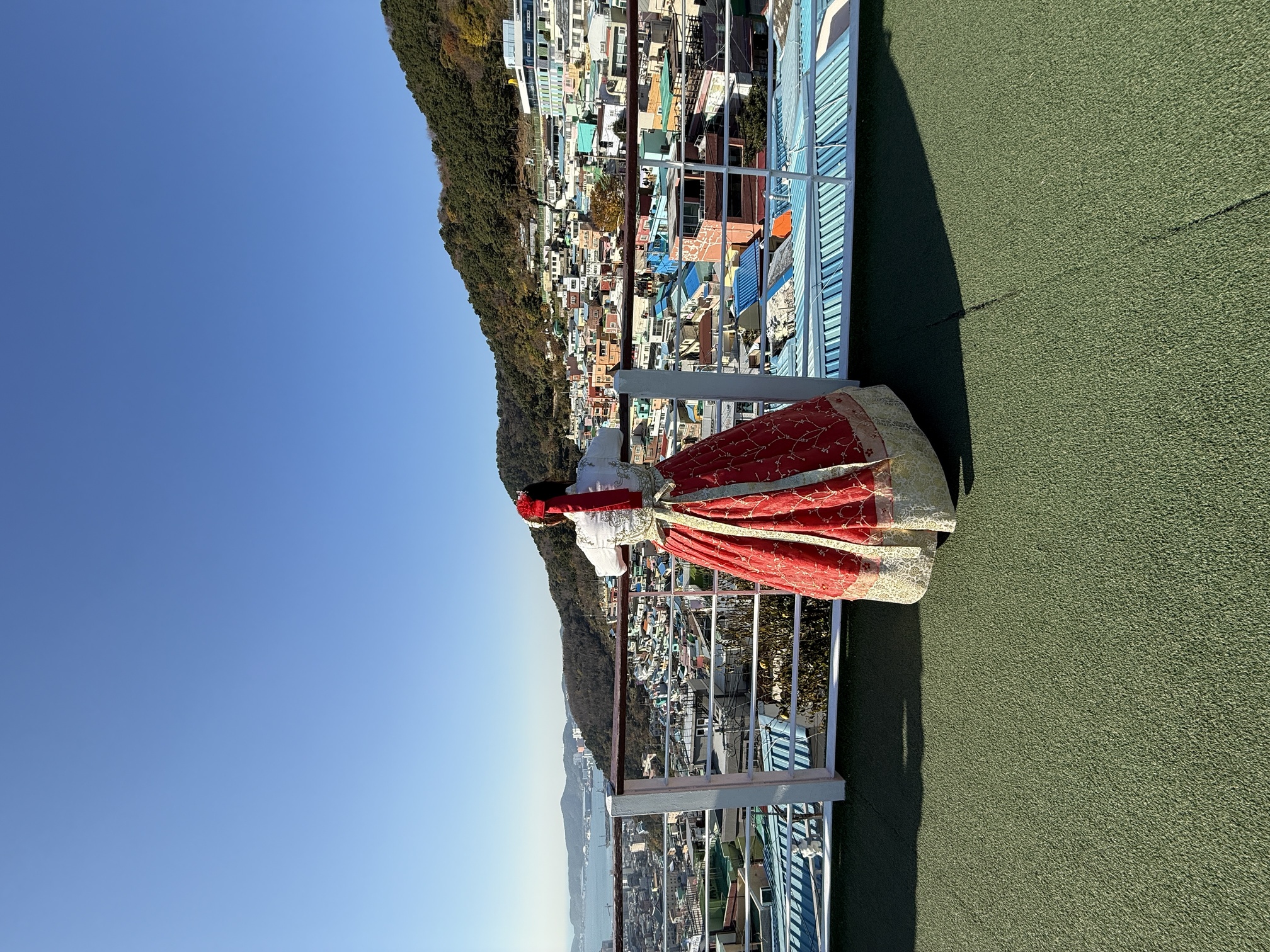
From Gamcheon, make your way down to Jagalchi Fish Market for a late lunch. Walk the ground floor of live tanks, point at what you want, take it upstairs to a restaurant and it arrives ten minutes later. No menu, no ambiguity. Best visited when the market is still at volume.
Hanbok rental at the village entrance runs about 15,000 won for two hours. The narrow lanes make large bags impractical. Come with comfortable shoes. The climb from the lower entrance to the top viewing point is steep but short.
Day two in Busan: the coast. The Haeundae Blueline Park Sky Capsule, glass pods running along the coastline on a narrow gauge track above the sea. Book ahead online because it fills up. Then Busan X The Sky on the 100th floor of the Haeundae LCT, the highest observation deck in Korea, with views across the entire city and coastline. BIFF Square in Nampo-dong in the evening, Korea's answer to the Hollywood Walk of Fame, worth a slow walk before dinner at Gwangalli with the bridge lit up behind the meal.
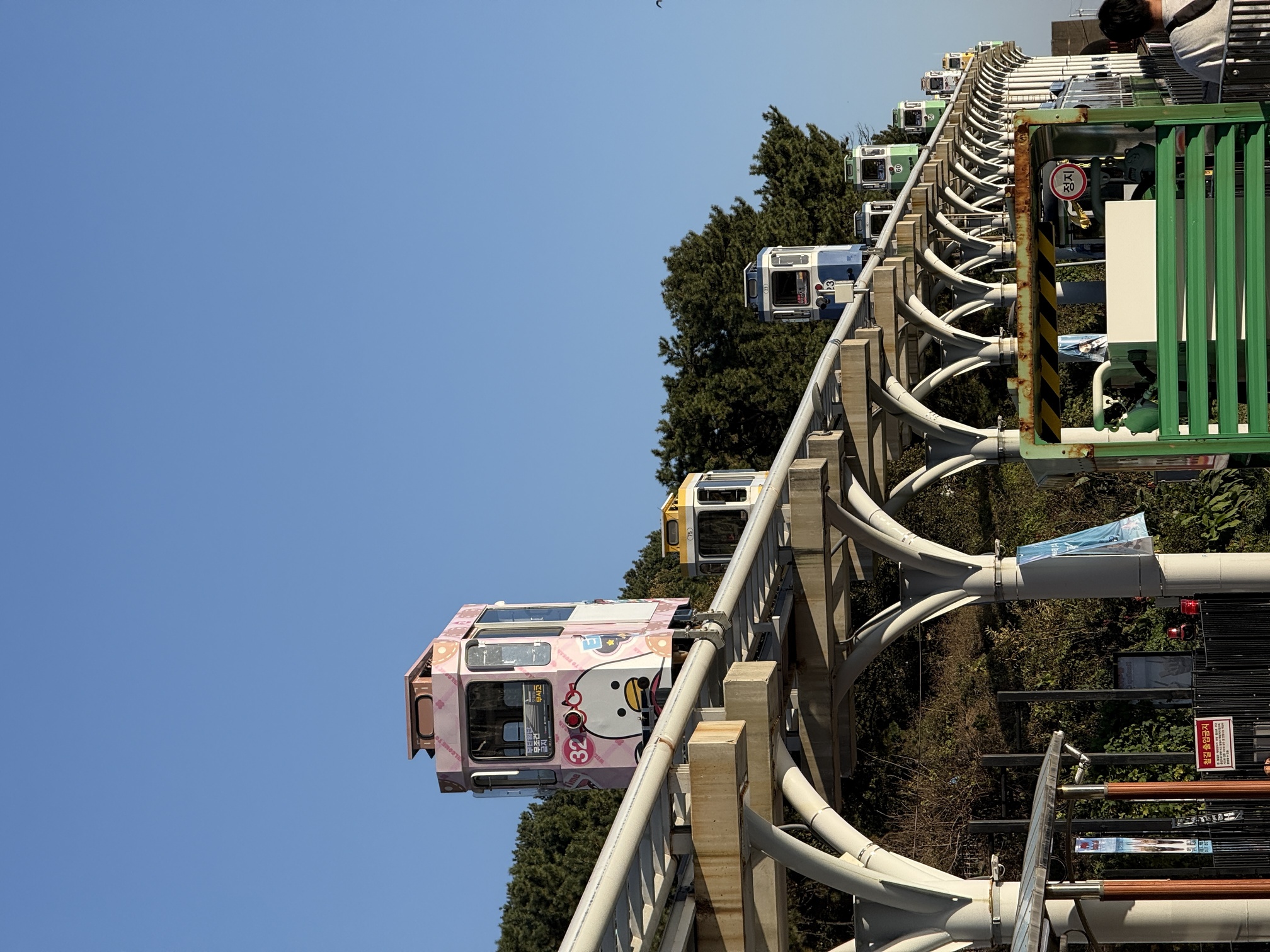
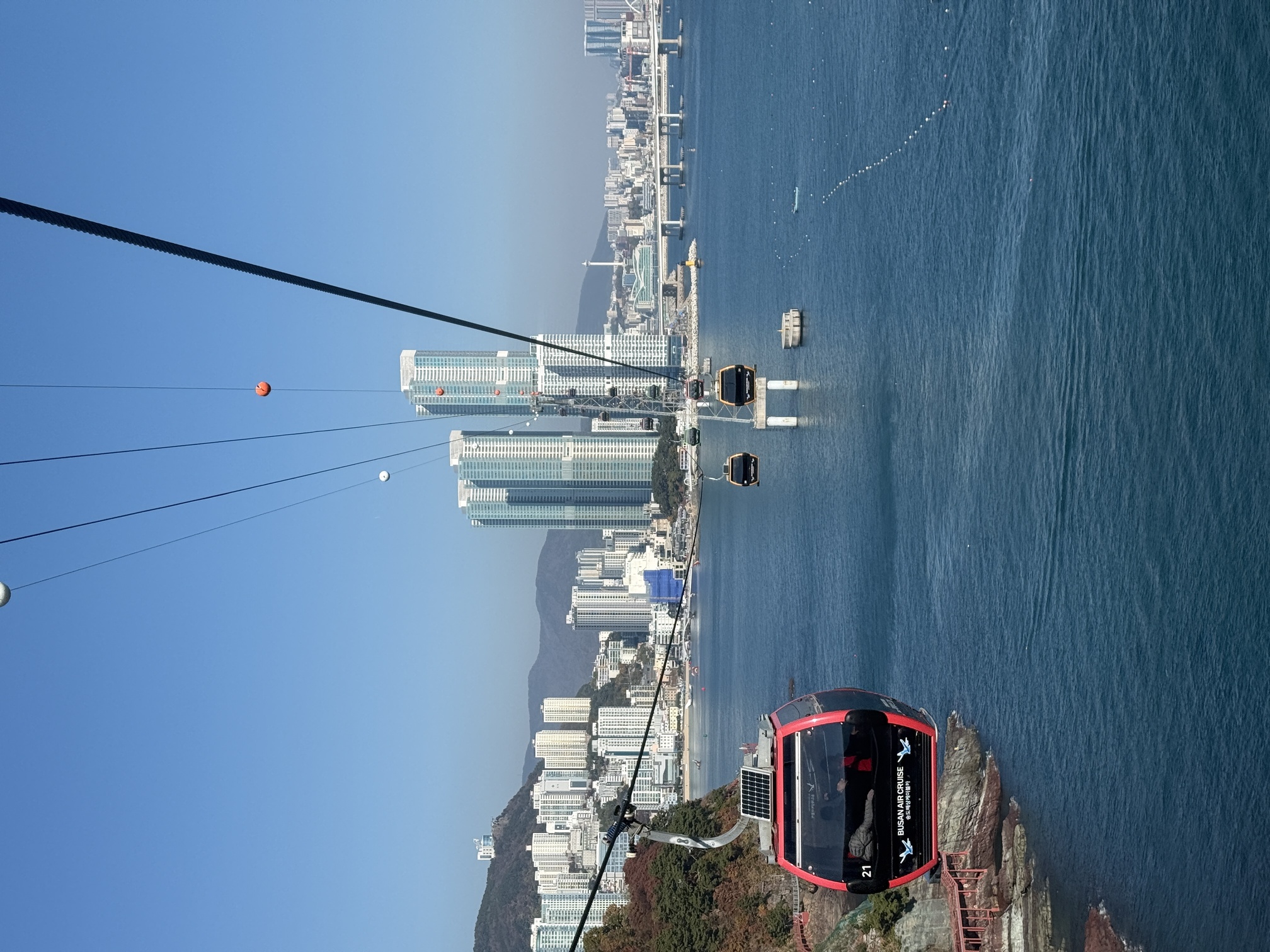
Day three in Busan: Songdo, Oryukdo, and Spa Land. The Songdo Air Cruise cable car crosses the bay in glass-bottomed cars and is a good way to start a day before your legs have fully committed to more walking. Oryukdo Skywalk is a horseshoe-shaped glass walkway cantilevered over the sea at the southern tip of Busan's coastline. The Busan Luge, a gravity luge track cut into the hillside with the city below, is the kind of activity that seems like it belongs on a different kind of trip and then turns out to be the most enjoyable forty minutes of the week.
Save the afternoon and evening for Spa Land at Centum City. This is not an optional addition to the Busan leg. It is the correct way to end it. Centum City holds the record as the world's largest department store and Spa Land sits inside it, spread across two floors with 22 themed rooms, each designed around a different culture or mineral treatment. There are Roman baths, Finnish saunas, salt rooms, charcoal rooms, jade rooms, a Bulgarian rose room, and a clay room that we could not fully identify but stayed in for longer than we planned. We spent half a day here. By the time we left, nine days of constant movement had been thoroughly addressed.
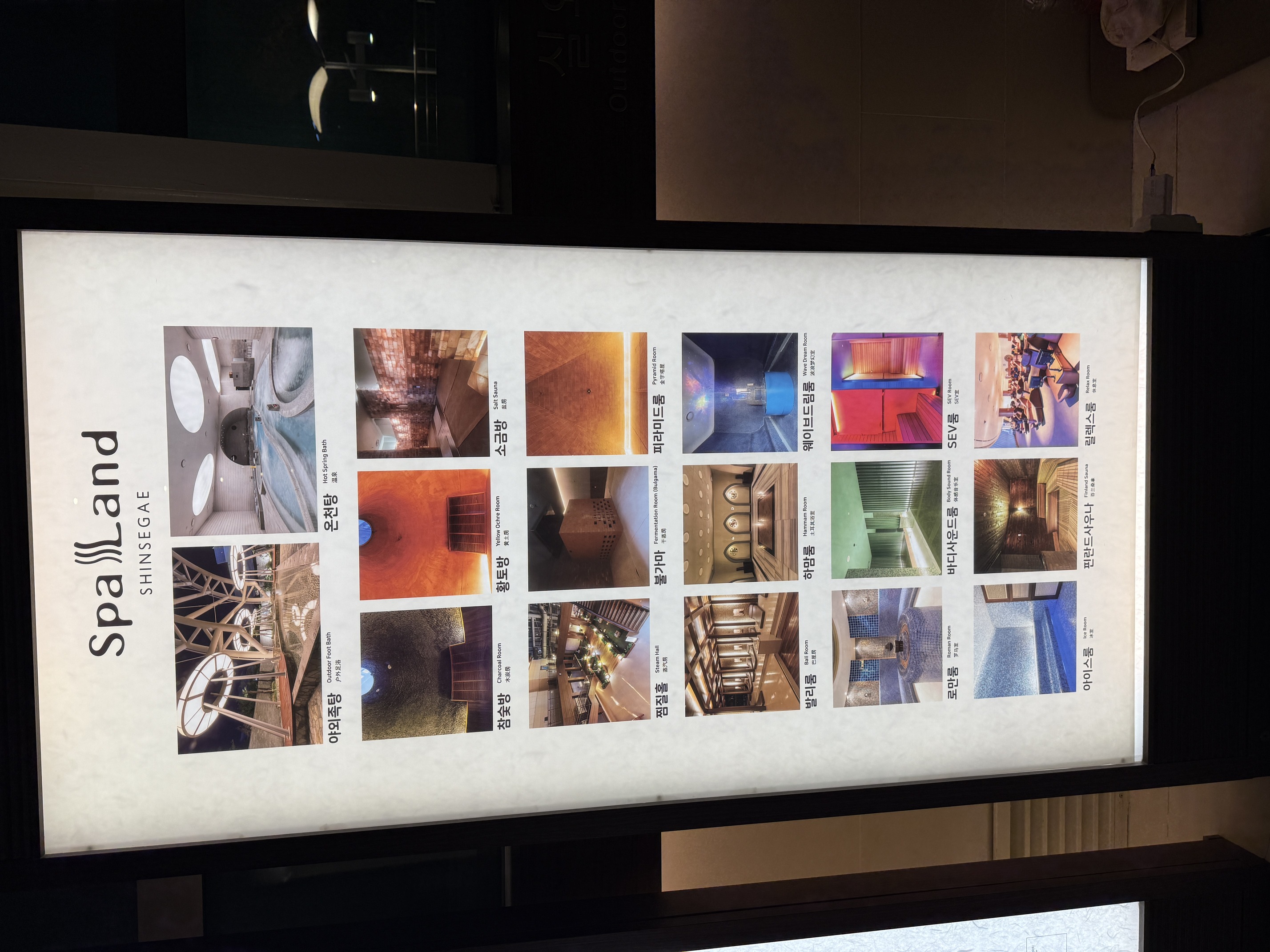
Entry includes a jimjilbang gown and towel set. The themed rooms are co-ed and require the gown. Private bath pools are separated by gender. Bring nothing except a change of clothes for after. Lockers are provided. Allow a minimum of three hours to do it properly. Half a day is better. Weekday afternoons are quieter than weekends.
The KTX from Busan to Seoul takes 2 hours 36 minutes. Take the 10:28AM departure and you arrive by 1PM with the full afternoon free in the capital. Book on the Korail website or the Let's Korail app. Window seats on the left side going north have the better views on arrival into Seoul.
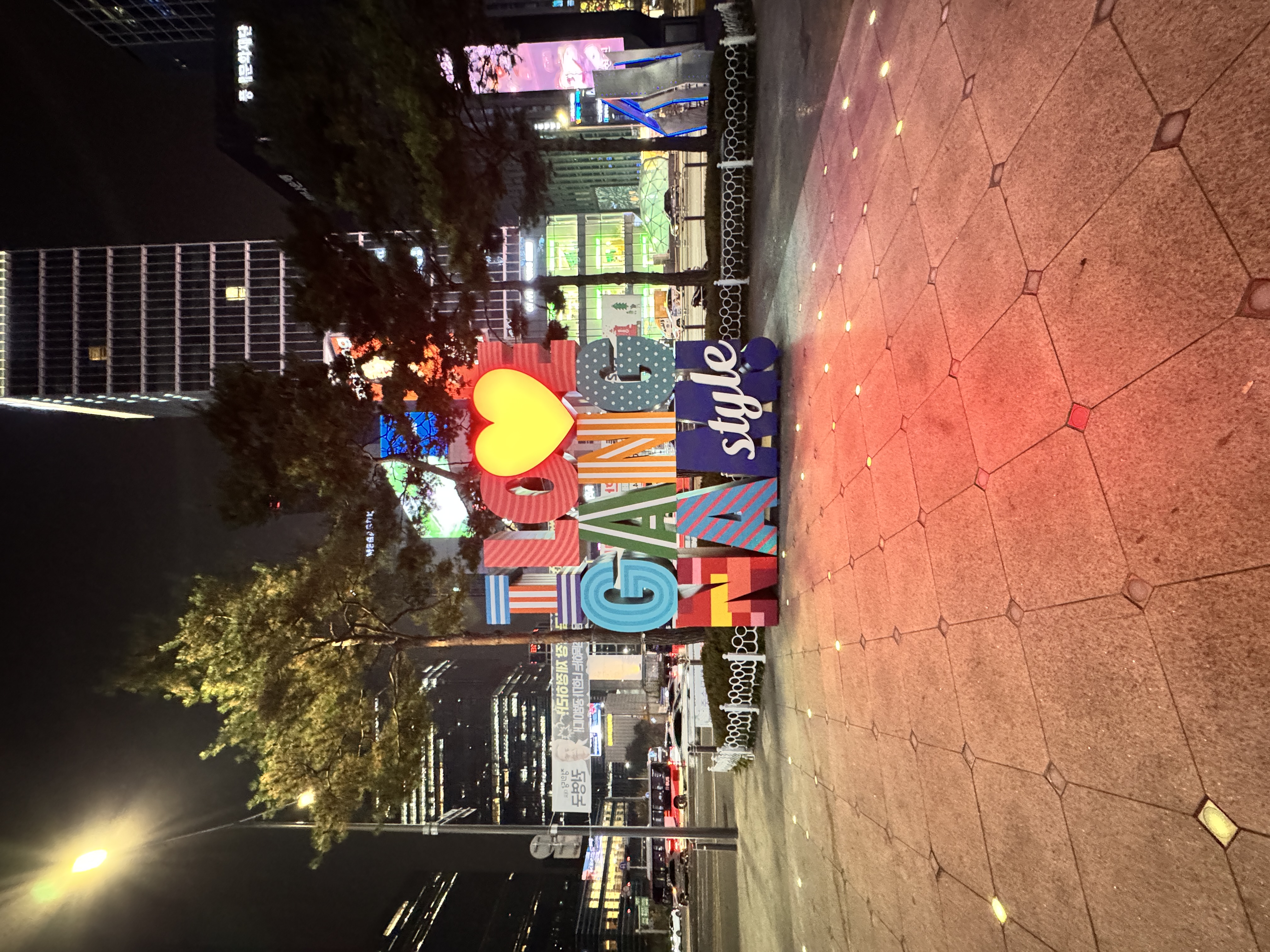
The final afternoon belongs to Gangnam and K-beauty. This is the correct order: spend nine days eating and walking and sweating through Busan, then arrive back in Seoul and let the city fix you. The skincare clinics in Gangnam operate on walk-in appointments and offer treatments at a fraction of what the same service costs in Europe or the US. A proper Korean facial, with the layered essences, the sheet mask, the LED light therapy, and extractions done with a precision that feels almost medical, takes about 90 minutes and costs between 50,000 and 120,000 won depending on what you choose. Walk out and your skin feels like a different organ entirely.
After the clinic: the shopping. Olive Young, the Korean beauty chain, is the correct starting point. The shelves are organised by concern rather than brand, which means you can actually find what you are looking for. Sun cream, toner pads, lip sleeping masks, snail mucin serums, sheet masks in quantities that make the customs declaration slightly awkward. Then Gwangjang Market for food souvenirs: dried seaweed, gochujang paste, yakgwa honey cookies, and instant ramyeon in flavours that do not exist outside Korea. Leave the afternoon for this and pack accordingly.
"K-beauty is not a trend. It is an entire philosophy about skin that starts with the assumption that 10 steps is a reasonable morning routine. After one afternoon in Gangnam, this begins to seem not only reasonable but obviously correct."
People who have done Japan ask whether Korea will feel like more of the same. It will not. Japan's food culture is about restraint and technique. Korea's is about heat, fermentation, and abundance at the table. Japan asks you to walk slowly through something very old. Korea surprises you with how alive a city can feel at midnight on a Tuesday.
Do not arrive in Korea looking for what you loved about Japan. What it offers is different and entirely worth the trip on its own terms. The temples are fewer and less prominent. What Korea offers: nightlife that runs until 5AM, the world's best fried chicken, beauty culture taken more seriously than in most European capitals, a tech infrastructure that makes everywhere else feel slow, and a spa culture that turns recovery into an art form.
"Korea is a country completely comfortable with what it is. It is not trying to be anything other than Korea, and that confidence turns out to be one of the most appealing things about being there."
Plan both trips. Do them in either order. They will not overlap.
Layers are essential. Seoul in October sits around 16 to 22 degrees during the day and 7 to 12 at night. A light down jacket or mid-weight coat covers most situations. Busan runs slightly warmer. Jeju is the warmest of the three. Comfortable walking shoes are not optional. Seoul days average 15,000 to 20,000 steps. Bring a portable charger: the phone is in constant use for maps, translation, and photographing food.
Planning a Korea trip? The full 11-day itinerary with every booking detail is on the site.
Message us on WhatsApp