Itinerary · 8 Days · January
Iceland in Midwinter
Reykjavik · Golden Circle · South Coast · Ring Road | Nov-Feb (Aurora) | Fly into & out of Keflavik
Iceland is return only: fly into Keflavik, fly out of Keflavik. There is no second international airport. The natural routing from India is via a Nordic hub. Oslo, Copenhagen, Helsinki and Stockholm all have direct connections to Reykjavik, and a 10-hour layover in any of them turns your transit into a bonus half-day. The trip is built around three zones: Reykjavik as base, the South Coast as the essential day-drive, and two nights on the Ring Road to reach the places the day-trippers never see.
Before You Go
Driving vs. organised tours. We drove ourselves and loved the freedom. But driving on snow and ice in a foreign country is not for everyone, and that is perfectly fine. Iceland has excellent licensed tour operators who run every major experience: Golden Circle, South Coast, glacier hike, aurora tours. You can do this entire trip without touching a steering wheel. Take the Flybus from Keflavik to Reykjavik on arrival, book day tours from the city, and let someone else handle the roads. If you do choose to drive: pick up the rental car at Keflavik Airport, get automatic transmission, confirm the insurance covers gravel roads, and carry your IDP.
If driving: get an International Driving Permit (IDP) before leaving India from your nearest Regional Transport Office. One working day, a few hundred rupees. Most rental desks in Iceland will ask for it alongside your Indian licence.
Check road.is every morning. The Icelandic Road Administration rates every road green, orange or red. If a road shows orange or red, do not drive it. Conditions can change from clear to dangerous within minutes, especially in winter.
Travel insurance, and a word about luggage. Our airline misplaced our bags on the Oslo to Reykjavik leg. We landed in Iceland in January with nothing but what was in our cabin bags. The lesson we took from this: pack a small carry-on with your absolute essentials, charger, one set of warm clothes, medications, camera. The airline will reimburse reasonable emergency purchases (a charger, a base layer, toiletries) if you submit receipts, so do not wait around hoping the bags show up. Report it at the desk immediately, get a Property Irregularity Report number, buy what you need, and keep every receipt. The bags arrived the next day. The right travel insurance covers the gap. Do not skip it for Iceland.
Daylight is 5 hours in January. Roughly 11am to 4pm. Every outdoor activity happens in this window. Structure your days around it: drive and walk in daylight, eat in early evening, aurora hunt after 9pm when the sky is fully dark.
For the aurora, book a tour. This is our honest advice. Licensed aurora tour operators in Reykjavik run minibus tours every clear night, starting around 9pm. They monitor cloud cover and KP index in real time, know exactly which roads to take, and drive you to locations with the best visibility. On our trip we chased the aurora ourselves one night and joined a tour another night. The tour was a different experience entirely. The guides know the sky in a way you cannot replicate from an app. If you insist on going alone, download Vedur (Iceland Met Office) and Aurora Forecast, check both by 6pm, and drive at least 30 minutes from the city. But the tour is the better call.
Day by Day
The Routing
Return to Keflavik, via a Nordic City
Iceland is return only: fly into Keflavik (KEF), fly out of Keflavik. There is no second international airport. From India, route via Oslo, Copenhagen, Helsinki or Stockholm, all of which have Icelandair or SAS connections to Reykjavik. A 10-12 hour layover in any Nordic capital turns your transit into a bonus half-day. Pick up your rental car at the airport on arrival, you will need it for the entire trip. Automatic transmission, and check that the insurance covers gravel roads (F-roads), which are unpaved mountain tracks. In January you do not need a 4x4 for the Ring Road, but ground clearance helps.
KEF AirportNordic LayoverRental Car Pickup
Best Time to Go
November to February for maximum aurora darkness and snow landscapes. June to August for the midnight sun, green valleys and puffins. March and October are shoulder seasons: shorter aurora windows but less cold. January is our recommendation: the darkness is long, the aurora probability is high, and the tourist numbers are the lowest of the year.
Where to Stay
Reykjavik · South Coast · Ring Road
Reykjavik: stay in the 101 district, walking distance from Hallgrimskirkja, the harbour and the restaurant strip on Laugavegur. Days 1 to 4 base here and drive out daily. Airbnb works particularly well in Reykjavik: the apartments are well-heated, well-equipped, and often cheaper than hotels with more space. South Coast detour: Vik or Selfoss for nights 5 and 6, positioning you on the east end of the South Coast so you are not driving the same road twice. Ring Road nights: a guesthouse or hotel near Jokulsarlon glacier lagoon gives you the best shot at an aurora reflection over the water, one of the few experiences in travel that is genuinely impossible to describe.
101 ReykjavikVik GuesthouseJokulsarlon Area
On Aurora Chasing
Book an aurora tour from Reykjavik. The licensed operators run every clear night, monitor conditions in real time, and know exactly where to go. We did both: chased it ourselves one night, joined a tour another. The tour wins. The guides read the sky in ways no app can replicate. If you go alone: you need cloud cover below 30% and a KP index of 3 or higher. Drive at least 30 minutes from the city. The aurora is silent and moves slowly. Nothing like the time-lapse videos. Give it 45 minutes minimum once you are outside.
First-Timer Notes
What Nobody Tells You
Iceland in January has 5 hours of usable daylight, roughly 11am to 4pm. Every outdoor activity happens in this window. You do not need to drive: every major site has licensed day tours from Reykjavik. We drove and loved the freedom, but if ice driving is not for you, book tours and take the Flybus from the airport. Either works. Wind is the real weather event, not cold. A -2C day with 80km gusts is harder than a -10C calm day. Check road.is every morning if driving. Vegetarians are well catered for: onion soup and fresh bread is on every menu, as are vegetable pastas, cheese dishes and skyr-based desserts. Reykjavik restaurants all have vegetarian options. Outside the city, simpler kitchens will always have something.
road.is daily checkVedur Aurora app11am-4pm daylight window
What to Wear
Merino wool base layer, mid-layer fleece, waterproof and windproof outer shell. This is non-negotiable. Iceland's wind cuts through any jacket not rated for it. Waterproof boots with grip: the pavements in Reykjavik ice over completely and are not gritted. Gloves that work with a touchscreen, or a separate pair for the camera. Hand warmers are available at N1 petrol stations everywhere and are worth buying on Day 1.
Reykjavik · Arrival
The City That Glows in the Dark
Flight lands at Keflavik, 45 minutes from the city. If driving, collect the rental car at the airport. If not, the Flybus connects Keflavik directly to the BSI bus terminal in Reykjavik and costs around ISK 3,500 per person. Check in to your hotel or Airbnb. The city in January is small, walkable and colourful: painted corrugated iron houses, street art, geothermal steam rising from pavements. Walk Laugavegur from end to end in the afternoon light, which fades by 4pm. Hallgrimskirkja church is worth climbing for the city view in the last of the daylight. Dinner on the main strip. If the forecast is clear tonight, your tour operator will be in touch about the aurora run.
HallgrimskirkjaLaugavegur StreetHarpa Concert HallAurora Attempt 1
Meals
Dinner: Sjavargrillid (seafood grill, the langoustine soup is the thing to order). Budget option: Baejarins Beztu Pylsur, the famous hot dog stand near the harbour, open late, ISK 600 a dog and genuinely good. Breakfast tomorrow: Braud and Co bakery on Frakkastigur, opens 7am, best cinnamon rolls in the city.
Golden Circle
Geysers, Parliament and a Waterfall in a Crater
The Golden Circle is a 300km loop from Reykjavik covering three sites so different from each other they feel like separate countries. Thingvellir National Park is where the Eurasian and North American tectonic plates are visibly pulling apart and where the Icelandic parliament was founded in 930 AD. The park feels genuinely ancient. Geysir is the original geyser, the word comes from this field. Strokkur erupts every 5 to 8 minutes and shoots 30 metres into the air with no warning. Gullfoss is a double waterfall dropping into a canyon; in January the surrounding rocks are ice-covered and the spray freezes mid-air. Do the loop clockwise to end at Gullfoss in the afternoon light.
Thingvellir ParkStrokkur GeyserGullfoss WaterfallTectonic Ridge Walk
Meals
Lunch: Efstidalur II, a working dairy farm on the Golden Circle route. They make their own ice cream from the herd on site. Surreal to eat fresh ice cream in a blizzard, but correct. Dinner back in Reykjavik: Forrettabarinn for small plates. Aurora attempt 2 tonight: the Golden Circle is far enough from Reykjavik that pulling over on the return drive gives you genuinely dark skies, ideal for aurora spotting.
Reykjavik · Buffer Day
The Day Iceland Keeps for Itself
This day is intentionally unplanned. Iceland's weather makes planning specific outdoor activities on specific days a losing game. If yesterday's Golden Circle was cut short by a storm, today you finish it. If the aurora forecast is exceptional, sleep in and save your energy for a long night. The Blue Lagoon is 20 minutes from the airport and works perfectly on this day. Book in advance, it sells out weeks ahead. The Reykjavik Art Museum and the Settlement Exhibition (the excavated Viking longhouse under the city) fill a wet afternoon. Alternatively, take a longer drive down the Snaefellsnes Peninsula if weather allows. The glacier at the tip of the peninsula is where Jules Verne set Journey to the Centre of the Earth.
Blue LagoonSnaefellsnes PeninsulaSettlement ExhibitionReykjavik Art Museum
Meals
If Blue Lagoon: the in-water bar serves algae-infused cocktails and a beer while you float. Worth it once. Lunch in the city: Cafe Loki opposite Hallgrimskirkja for traditional Icelandic food. Try the skyr cake and the rye bread ice cream. Dinner: Grillmarkadurinn, the grill market, best lamb in Reykjavik. Icelandic lamb is grass-fed and roams free, it tastes different from anything you have had before.
South Coast · West
Waterfalls You Walk Behind and a Beach That Is Black
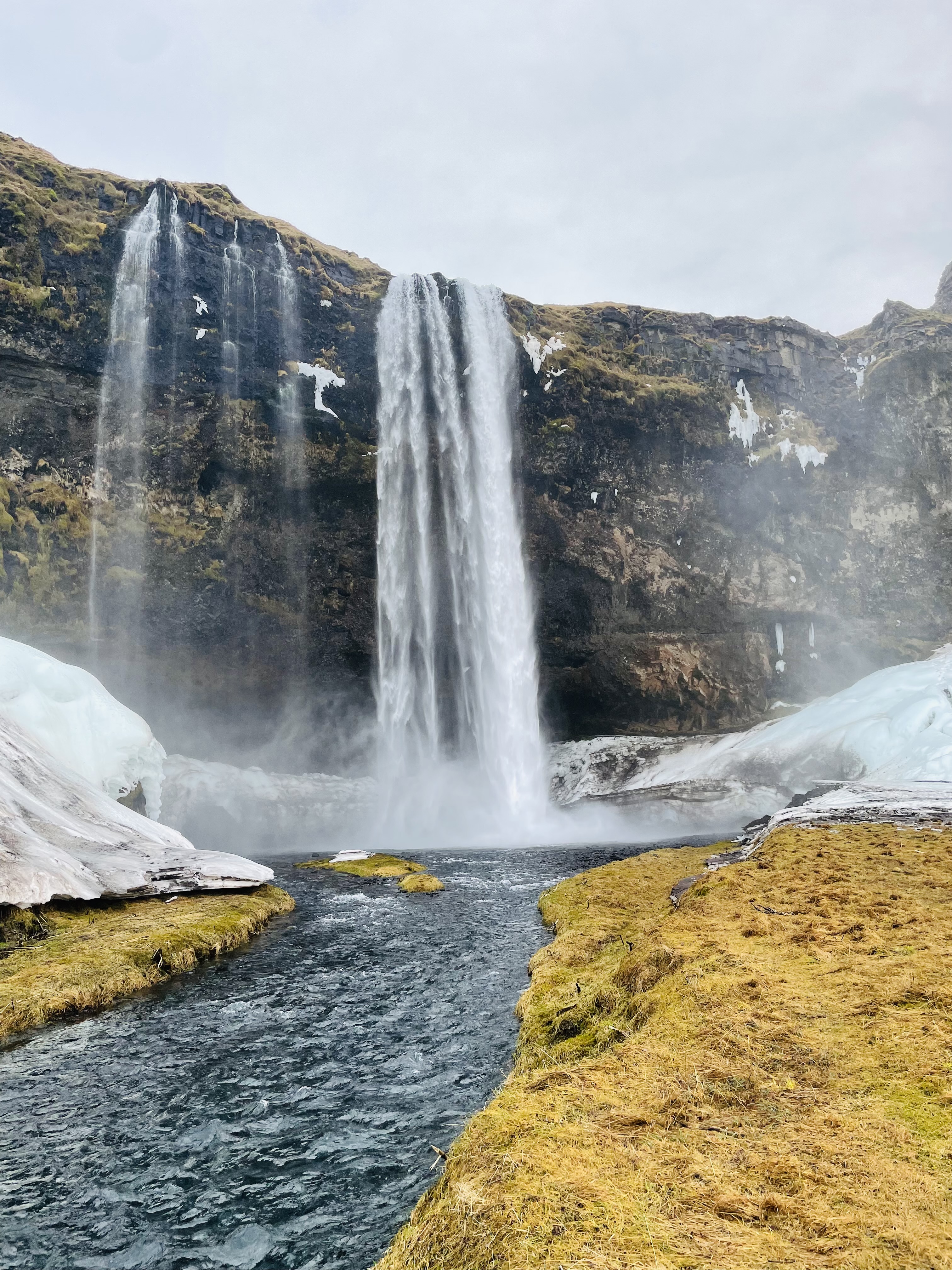
Drive east from Reykjavik on the Ring Road, stopping at Seljalandsfoss, a 60-metre waterfall with a path that takes you completely behind the curtain of water. In January this path is iced over and the spray freezes on your jacket instantly. Worth every second. Continue to Skogafoss, wider and more powerful, with a staircase to the top where the spray creates rainbows even in winter. The black sand beach at Reynisfjara near Vik is one of the most striking coastlines in the world: basalt columns rise from the sand, the sea steel-grey, hexagonal rock formations that look machined. Do not go near the water's edge. The waves here are called sneaker waves: they arrive without warning and with enormous force. Stay behind the safety markers. Overnight in Vik.
SeljalandsfossSkogafossReynisfjara Black BeachVik Village
Meals
Lunch: Gamla Fjosid near Selfoss, a converted barn serving soup and lamb stew, simple and exactly right for a cold January drive. Dinner in Vik: Sudur Vik restaurant, small and local, the fish soup is the thing. Aurora attempt 3 tonight from Vik. The village has almost no light pollution and on a clear night the aurora fills the entire southern sky over the black beach.
South Coast · East
A Glacier You Walk On and a Lagoon Full of Icebergs
Continue east. Vatnajokull is the largest glacier in Europe and its outlet glaciers come down to the road level. You can walk onto the ice on a guided glacier hike. This is a 2-hour activity requiring crampons and a guide, which are provided. Do not attempt to walk on a glacier without a guide. Jokulsarlon glacier lagoon is where icebergs calve off Vatnajokull into a saltwater lake and then drift slowly out to sea. In January the lagoon is partly frozen and the icebergs are locked into the ice surface, a landscape that looks post-apocalyptic in the best way. The Diamond Beach immediately adjacent is where icebergs wash up on black sand and catch the light like cut glass. Overnight near Jokulsarlon for the best aurora position.
Vatnajokull Glacier HikeJokulsarlon LagoonDiamond BeachFjadrargljufur Canyon
Meals
Lunch: Glacier Goose Cafe at Jokulsarlon, simple but warm and on-site. Dinner: your guesthouse or hotel will almost certainly serve dinner. Most Ring Road properties do, and the food is local, good and necessary after a cold day. If staying in a self-catering Airbnb, the nearest N1 petrol station carries soup, sandwiches and hot food that is better than it sounds. If not, Humarhofnin in Hofn is 45 minutes east and serves the finest langoustine you will eat anywhere. Worth the detour.
Ring Road · Return
Drive West, Stop Often, End in Reykjavik
Two days to drive back west along the Ring Road, which lets you stop at everything you drove past on the way out. Fjadrargljufur Canyon is a 2km-long fissure canyon 100 metres deep that opens suddenly from flat farmland. It looks Jurassic and is completely unknown outside Iceland. The Lava Centre in Hvolsvollur has the best volcanic science exhibit in the country and makes sense of everything you have been looking at. By Day 7 you are back in Reykjavik with one final evening. Walk Laugavegur one more time, eat well. The Northern Lights sometimes appear over the city centre when the forecast is strong. Stand on any hill facing north.
Fjadrargljufur CanyonLava Centre HvolsvollurKerith CraterFinal Reykjavik Evening
Meals
Day 6 lunch on the road: N1 petrol station soup is genuinely good in Iceland and a local institution. Dinner back in Reykjavik: Fiskfelagid (Fish Company) for the tasting menu if the budget allows, one of the best restaurants in the country. Day 7 last breakfast: Braud and Co again. Buy extra cinnamon rolls for the flight.
Reykjavik to Home
The Last Morning, Keflavik, and Wherever You Go Next
Drop the rental car at Keflavik Airport, allow 45 minutes extra for the return paperwork and a walk-around inspection. The airport is small and efficient. Duty free here has the best selection of Icelandic wool products, Skyr, and the Brennivin schnapps that you should buy at least one bottle of. If your connection is in a Nordic city and you have time, the layover city has earned a proper visit at this point. You have seen Iceland in midwinter. Very few people have.
Keflavik Duty FreeIcelandic WoolNordic Connection
Souvenirs
Lopapeysa (traditional Icelandic wool sweater) from Farmers Market or Handknitting Association in Reykjavik, not the airport souvenir shops. Skyr from any supermarket (Bonus is the local budget chain). Brennivin, the local caraway schnapps nicknamed Black Death. Icelandic sea salt. All significantly cheaper in the city than at the airport.
The Aurora Question
"The Northern Lights are silent and move slowly. Nothing like the time-lapse videos. You stand in the dark and watch the sky reorganise itself, and it is one of the strangest and most beautiful things you will ever see."
Three aurora attempts are built into this itinerary: the first night in Reykjavik, the Golden Circle return drive on Day 2, and the night at Vik on Day 4. Jokulsarlon on Day 5 is the bonus: the lagoon with aurora reflections over the iceberg-filled water is the photograph most people have seen without knowing where it was taken. You only need one clear night. January gives you the best odds of the year.
If every night is overcast. It happens. But you will still have had one of the most visually arresting weeks of your life. The South Coast, the glacier, the black beaches and the Ring Road are sufficient on their own. The aurora is the possibility that makes everything feel charged.
Budget Signal
Per Couple
8 nights · Includes accommodation, meals, activities, rental car and aurora tours
Budget
$3,000 – $3,500 (Rs.2.5 – 3L)
Guesthouses, budget hotels or Airbnb, self-catering some meals, skip Blue Lagoon and glacier hike
Mid-Range
$4,000 – $6,000 (Rs.4 – 5.5L)
Good guesthouses, hotels or Airbnb apartments, all meals out, Blue Lagoon, glacier hike, aurora tour one night
Luxury
$9,000 – $13,000 (Rs.8 – 12L)
Ion Adventure Hotel, 101 Hotel Reykjavik, private aurora guides, helicopter over glacier
Common Questions
What are the realistic chances of seeing the Northern Lights?
In January, with clear skies, roughly 60 to 70 percent on any given night. Over 8 days you have multiple attempts. The Vedur app is accurate 90 percent of the time within a 6-hour window. The biggest variable is cloud cover, not solar activity. Go outside on every clear night regardless of the KP index. A KP of 2 on a perfectly clear night beats a KP of 7 under clouds every time.
Is Iceland safe to drive in January?
Yes, on green-rated roads with the right vehicle and tyres. Rental cars in Iceland come fitted with winter tyres as standard in January. Check road.is every morning without exception. The Ring Road (Route 1) is generally kept clear. The danger is complacency: the roads look fine and then change in 20 minutes as a storm comes in from the sea. If the weather forecast shows high winds, do not drive. Pull over and wait.
Do I need a 4x4 for Iceland in January?
Not for this itinerary. The Ring Road, Golden Circle and South Coast are all accessible in a standard car with winter tyres in January. A 4x4 is required for F-roads, which are unpaved mountain tracks and are officially closed in winter anyway. The rental car insurance will not cover you on a closed road. Stick to paved roads and a regular car is fine.
Is the Blue Lagoon worth it?
Yes, once. It is very commercialised and very expensive (around ISK 10,000 to 15,000 per person depending on the package) but the experience of floating in 38-degree geothermal water while snow falls and steam rises around you is genuinely unlike anything else. Book weeks ahead, it sells out consistently. The Comfort package is sufficient, the Premium adds nothing significant. Go in the afternoon when the sky is darkening for the best atmosphere.
Is the glacier hike safe?
Yes, with a certified guide. Do not attempt to walk on any glacier without a guide and crampons. The surface looks stable but is not. Crevasses open without warning and are not visible from above. Book with Troll Expeditions or Arctic Adventures, both operate year-round at Vatnajokull. The hike takes 2 to 3 hours and is physically moderate. If you can climb 3 floors of stairs you can do it.
What should I eat in Iceland?
Langoustine soup at Sjavargrillid in Reykjavik. The lamb is exceptional: Icelandic sheep roam free and grass-fed, the flavour is completely different from farmed lamb. Skyr, the thick Icelandic dairy product, from any supermarket. The hot dog at Baejarins Beztu near the harbour, which Barack Obama once ate and which the locals will never let you forget. At Efstidalur farm on the Golden Circle, the ice cream made from their own herd. And at least one meal at a Ring Road guesthouse, which will be simple, local and exactly right after a long cold day on the road.
Planning an Iceland trip? We chased the aurora for three nights in January. We know which roads to trust, which forecasts to believe, and exactly how cold it gets at Jokulsarlon at midnight.
Talk to Us on WhatsApp
Journal · Coming Soon